

The best car gadgets earn their space by solving a recurring problem: recording an incident, keeping a phone powered, restoring tire pressure, or containing the everyday clutter that takes over a cabin.
Our approach is deliberately practical. We considered safety, installation, vehicle compatibility, reliability, storage burden, and long-term value before novelty. The right list will look different for a daily commuter, family, teen driver, rideshare operator, EV owner, truck owner, or outdoor traveler. Start with risk and friction, then add comfort.
Before buying any car accessories, check your owner’s manual, airbag locations, electrical limits, glass type, and local rules on windshield-mounted devices. A useful product installed badly can become a distraction or hazard.
Quick answer
Must-Have Car Gadgets at a Glance
Dash cam
- Best for
- All drivers
- Price
- $80–250
- Install
- Easy
- Compatibility
- Universal
Portable jump starter
- Best for
- Emergencies
- Price
- $60–150
- Install
- None
- Compatibility
- Check engine
Tire inflator
- Best for
- Road trips
- Price
- $35–120
- Install
- None
- Compatibility
- Universal
Phone mount
- Best for
- Commuters
- Price
- $20–70
- Install
- Easy
- Compatibility
- Check dash
USB-C charger
- Best for
- Families
- Price
- $15–45
- Install
- None
- Compatibility
- 12V socket
OBD-II scanner
- Best for
- Older cars
- Price
- $25–100
- Install
- Easy
- Compatibility
- 1996+ US cars
Side-by-side
Car Gadget Comparison
Use this as a priority guide. Prices are typical ranges, not live quotes, and compatibility always depends on the specific vehicle and product.
The definitive list
Best Must-Have Car Gadgets
These recommendations cover the highest-value vehicle safety gadgets, driving accessories, dashboard accessories, car tech, and interior car accessories. Each earns its place through usefulness rather than novelty.
Category
Best Overall
 01BEST OVERALL
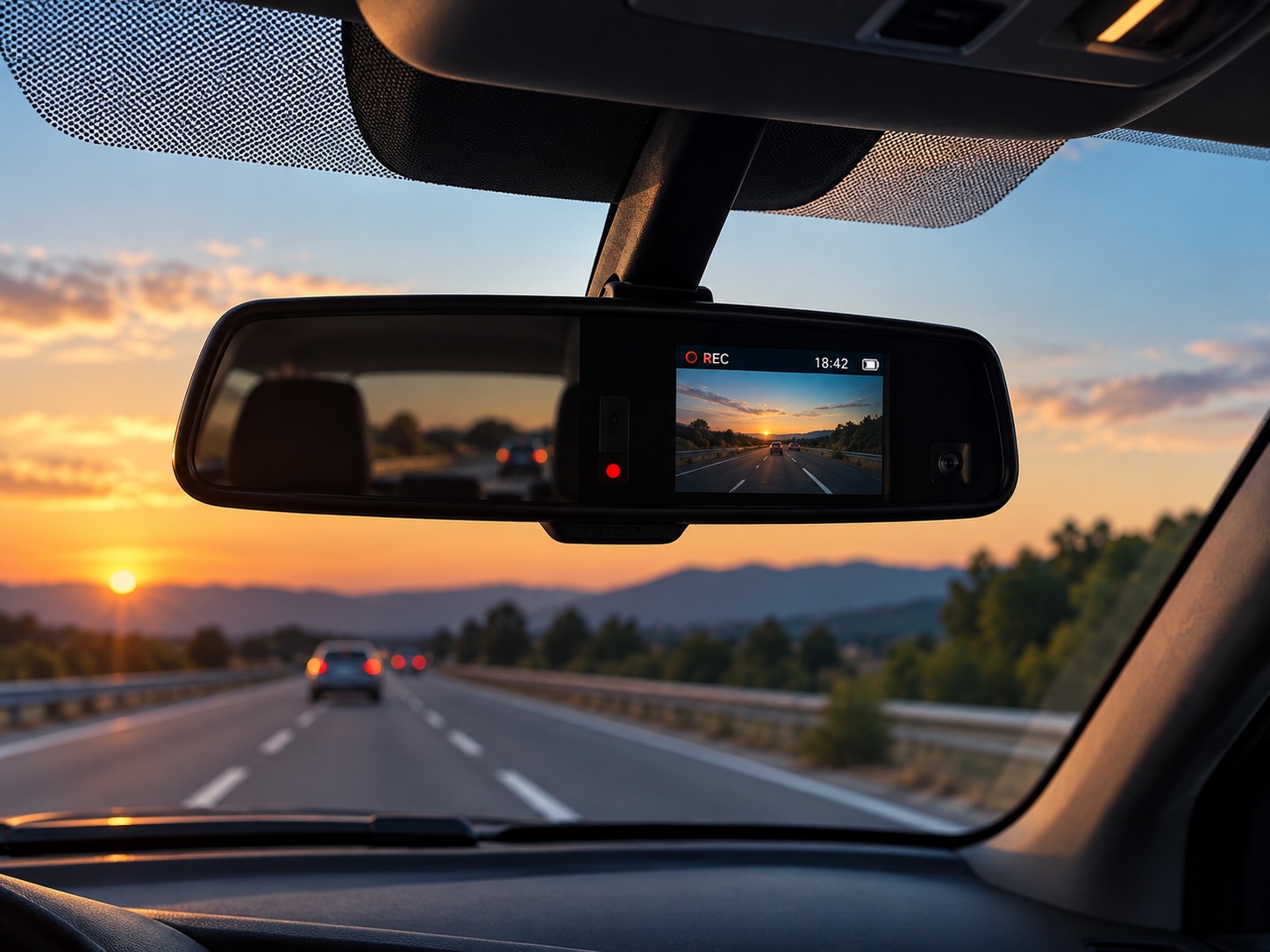
Dash Cam
A dependable dash cam creates an objective record of traffic incidents, parking damage, and unexpected road events. It is one of the few automotive gadgets that may prove its value in a single moment.
Why you need it
Choose one for evidence and accountability—not as a substitute for attentive driving. A compact camera mounted high and close to the mirror preserves sightlines.
Pros
Useful evidence after a collision
Set-and-forget operation
Models exist for every budget
Cons
Parking mode may require hardwiring
Memory cards wear out
 02BEST OVERALL
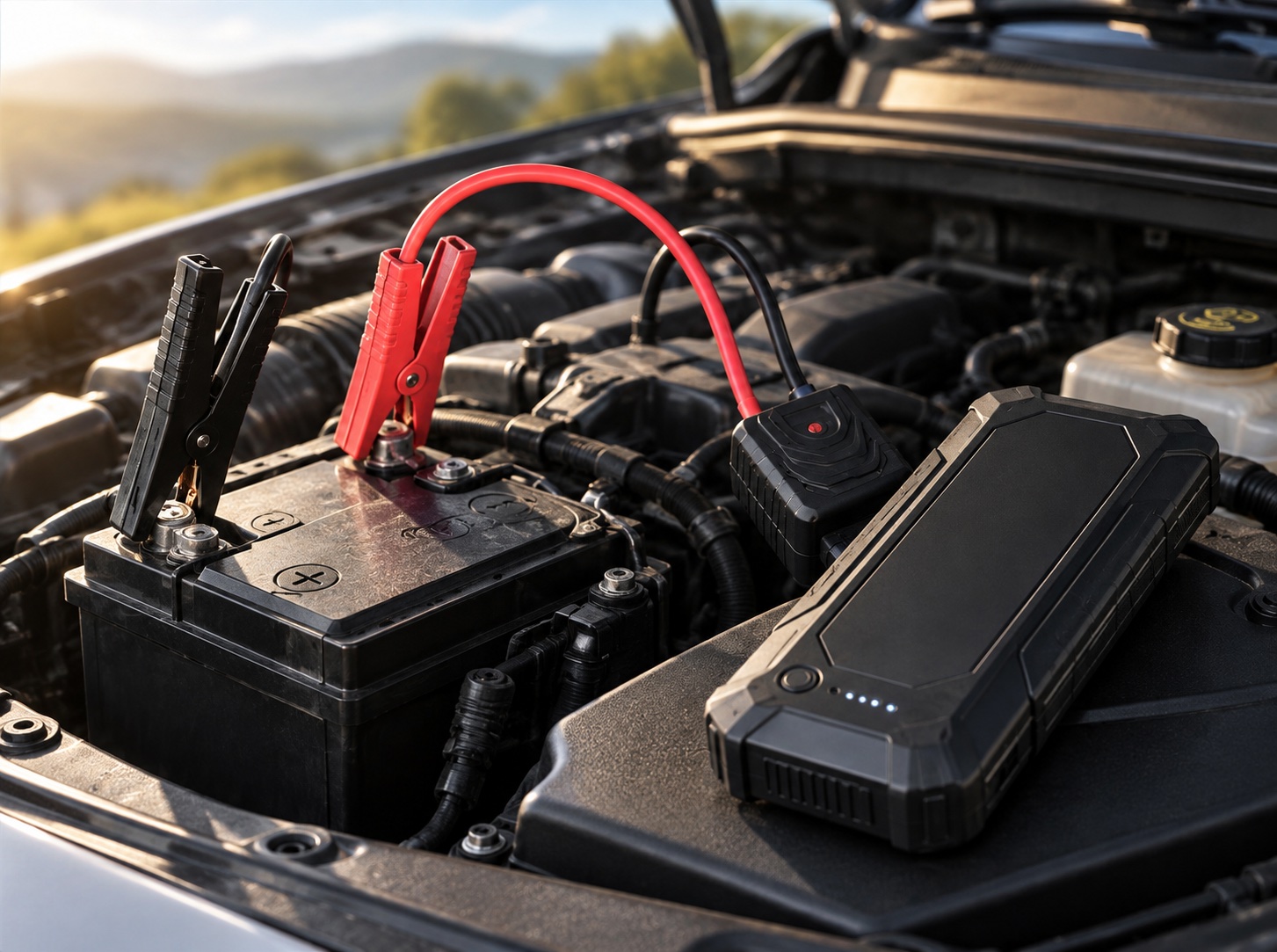
Portable Jump Starter
A lithium jump pack can restart a weak 12-volt battery without another vehicle. Many also provide a flashlight and USB power during an outage.
Why you need it
Dead batteries are common, inconvenient, and sometimes leave drivers in unsafe places. A charged pack offers independence while roadside help is on the way.
Pros
Compact and self-contained
Useful backup power
Simple guided connection
Cons
Must be recharged periodically
Capacity falls in extreme cold
 03BEST OVERALL
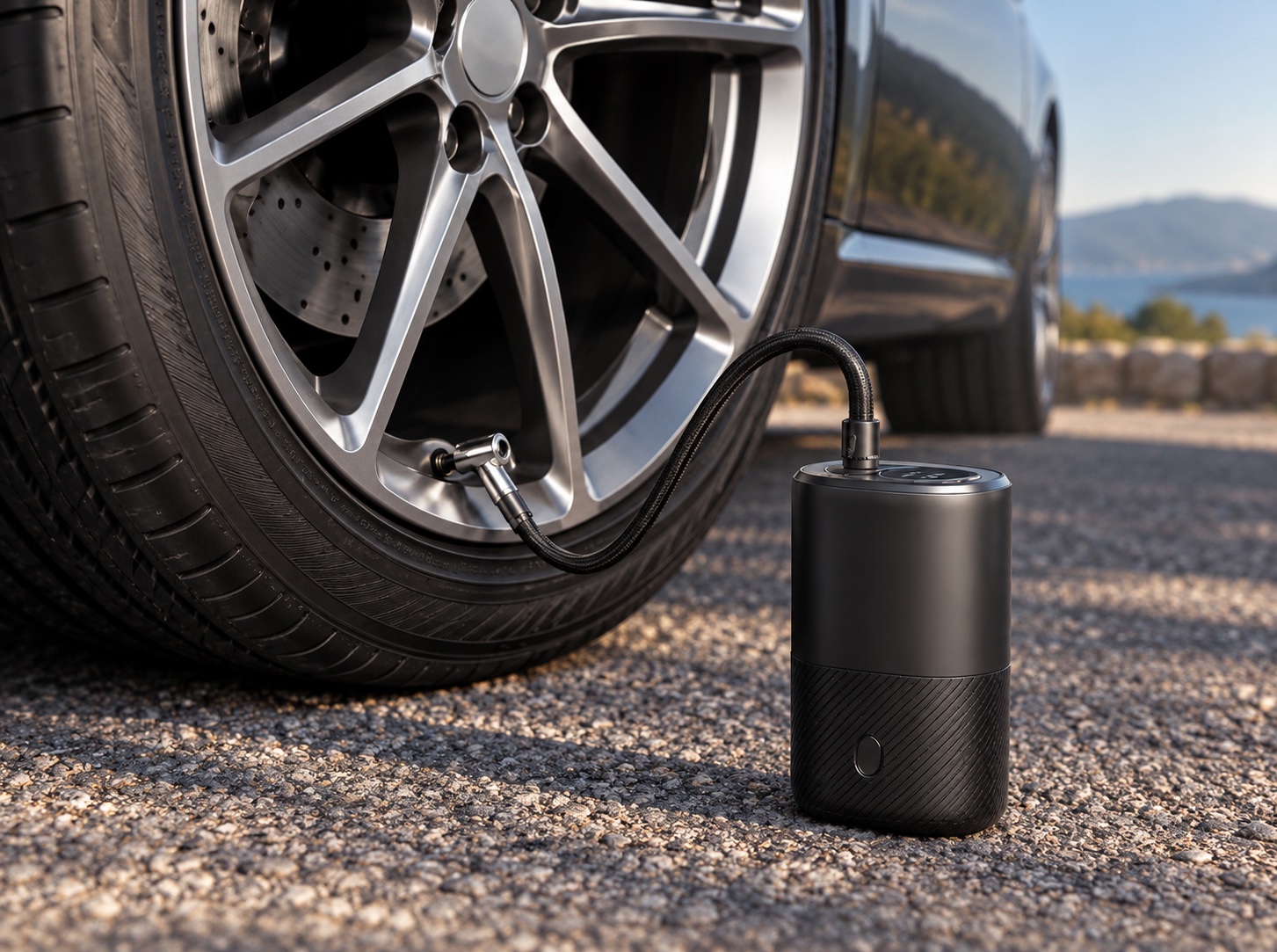
Portable Tire Inflator
A compact compressor restores pressure after a slow leak and makes regular tire checks easier. Cordless models are convenient; 12-volt models avoid battery upkeep.
Why you need it
Correct tire pressure supports predictable handling, tire life, and efficiency. An inflator can turn a manageable leak into a safe trip to a repair shop.
Pros
Practical year-round
Reduces service-station dependence
Useful for bikes and inflatables
Cons
Small units can be slow
Not a repair for tire damage
 04BEST OVERALL
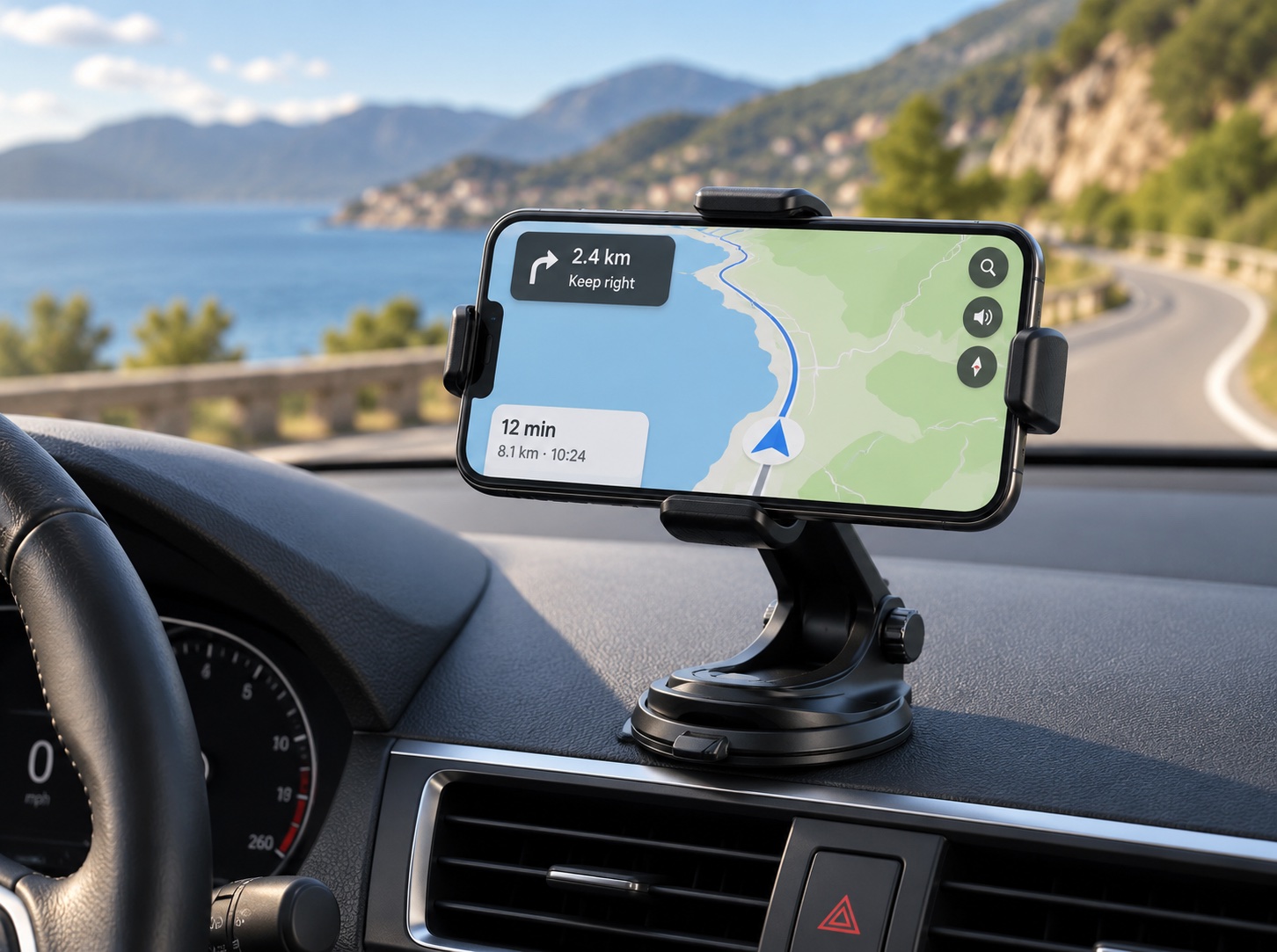
Low-Profile Phone Mount
A stable mount keeps navigation in a consistent, glanceable position. Vent, dashboard, windshield, and console designs fit different cabins and local laws.
Why you need it
The safest location is one that does not block your road view, controls, vents, or airbags and does not require reaching.
Pros
Reduces phone handling
Makes older cars more usable
Easy to move between vehicles
Cons
Vent mounts can restrict airflow
Adhesive mounts may mark trim
Category
Safety
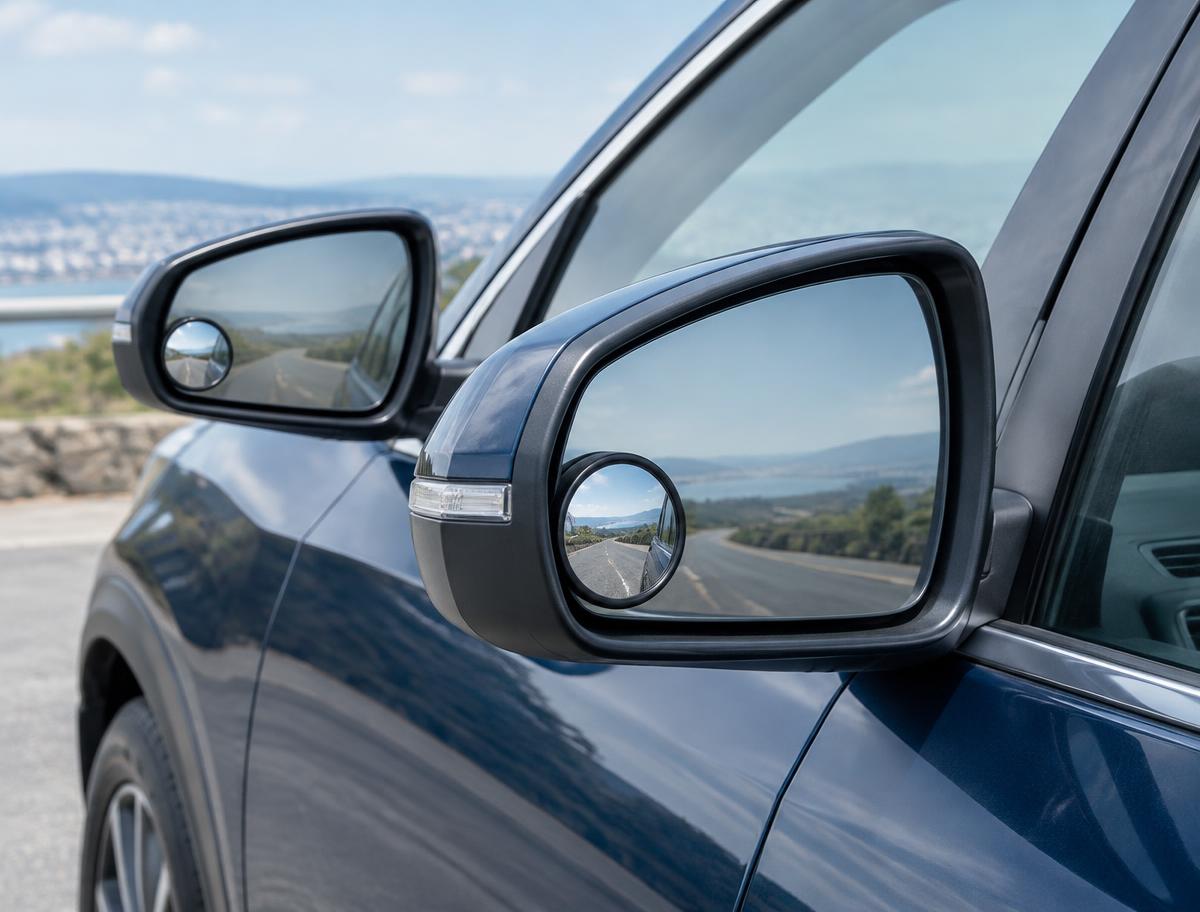 05SAFETY
Blind Spot Mirrors
Small convex mirrors add a wider view beside the vehicle, helping reveal cars or bicycles that may sit outside the main side-mirror image. They work best as a supplement to correctly adjusted mirrors and shoulder checks.
Why you need it
They can make lane changes and tight parking easier in vehicles with broad pillars or limited rearward visibility, without adding wiring or a screen.
Pros
Inexpensive visibility upgrade
Fits most side mirrors
No power or wiring required
Cons
Objects appear smaller and farther away
Poor placement can cover useful mirror area
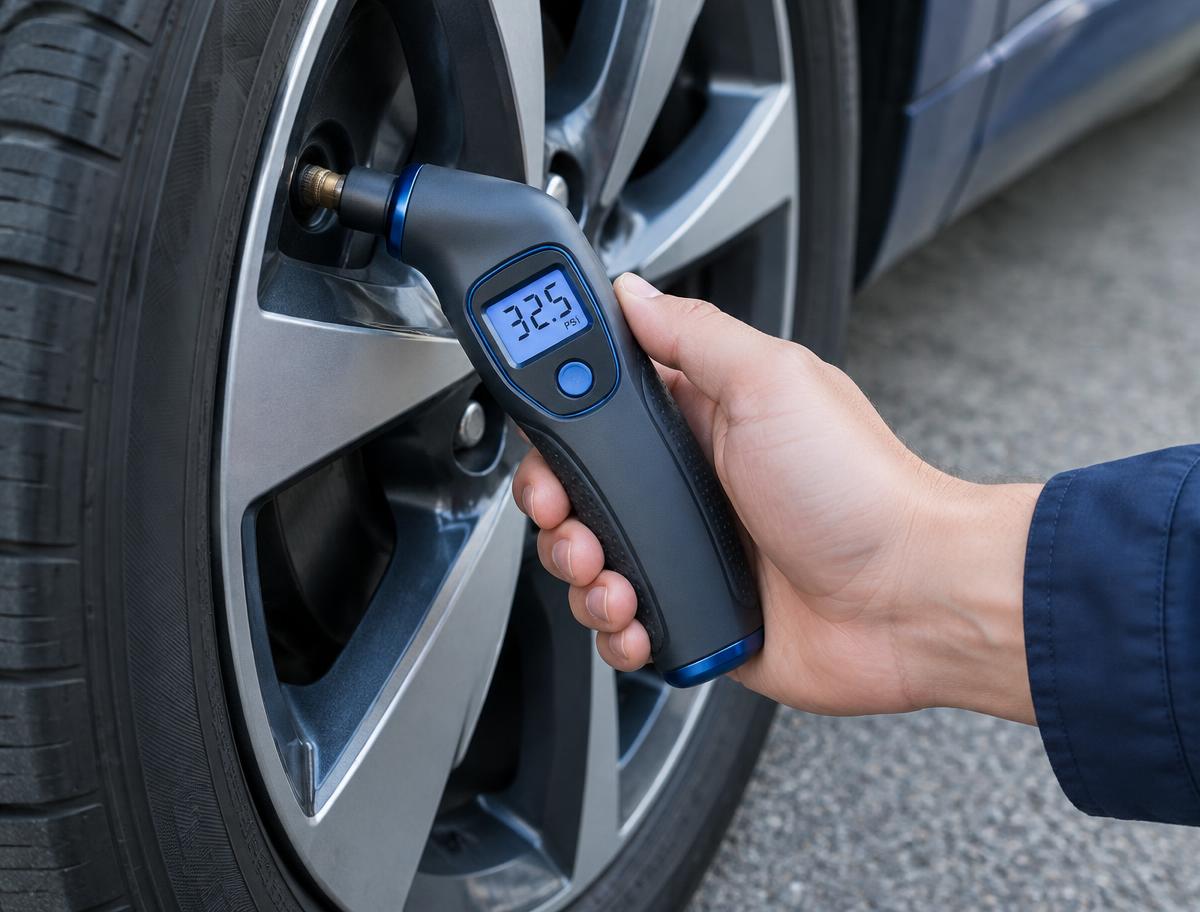 06SAFETY
Digital Tire Pressure Gauge
A digital gauge provides a quick pressure reading before a journey or when temperatures change. It is more convenient to read than a pencil gauge, but accuracy and a good valve seal matter more than extra display modes.
Why you need it
Tires naturally lose pressure, and dashboard warnings usually appear only after pressure has already fallen significantly. Regular cold-tire checks support predictable handling, tire life, and efficiency.
Pros
Fast, clear readings
Compact enough for the glove box
Useful across multiple vehicles
Cons
Requires a working battery
Cheap gauges can drift out of accuracy
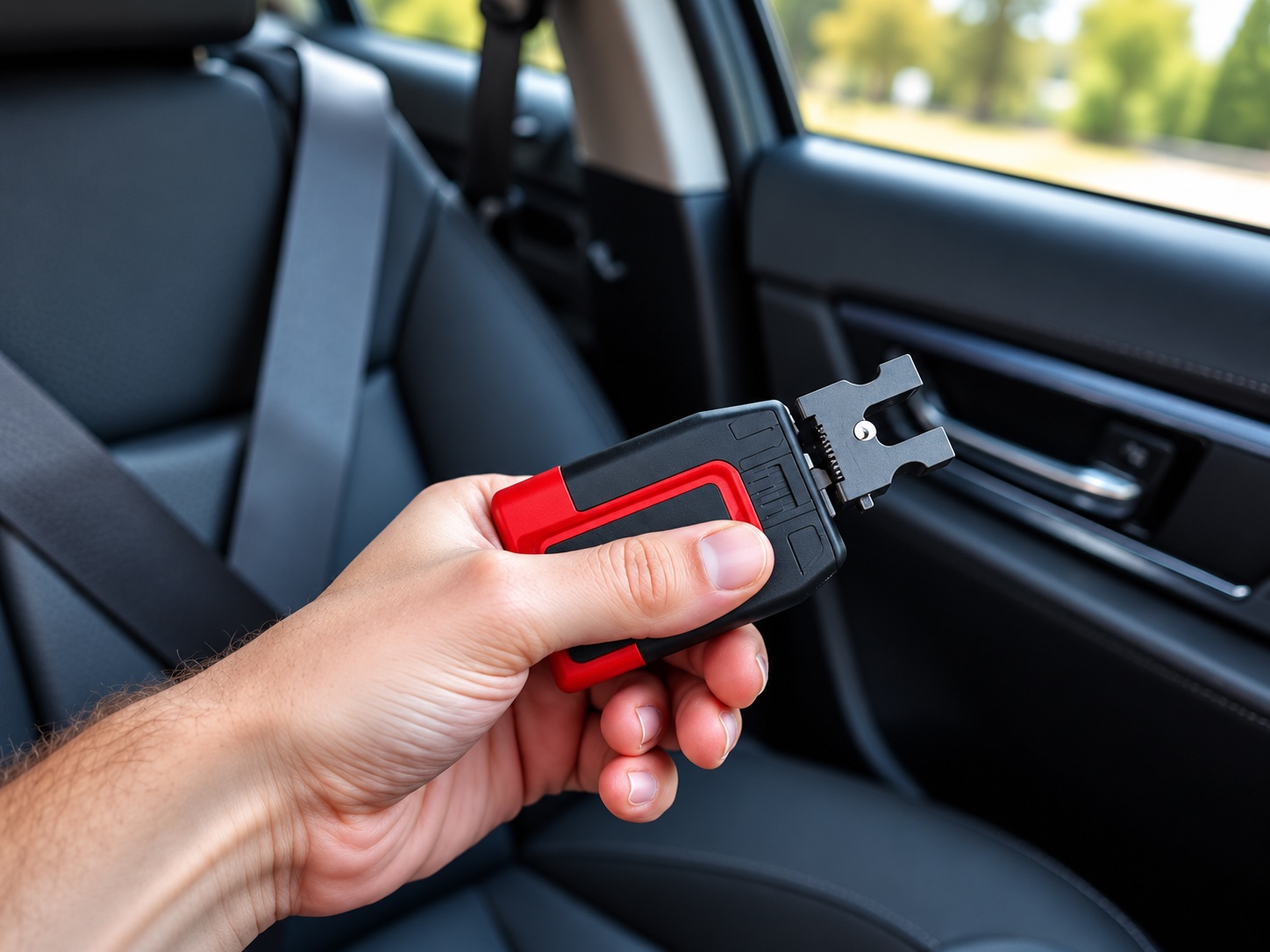 07SAFETY
Emergency Escape Tool
A compact seat-belt cutter and tempered-glass breaker offers a last-resort exit option after a severe incident.
Why you need it
It is inexpensive, but location matters: the tool must remain secured and reachable from the driver's seat after impact.
Pros
Low cost
Simple purpose
Takes little space
Cons
May not break laminated side glass
Loose storage makes it useless
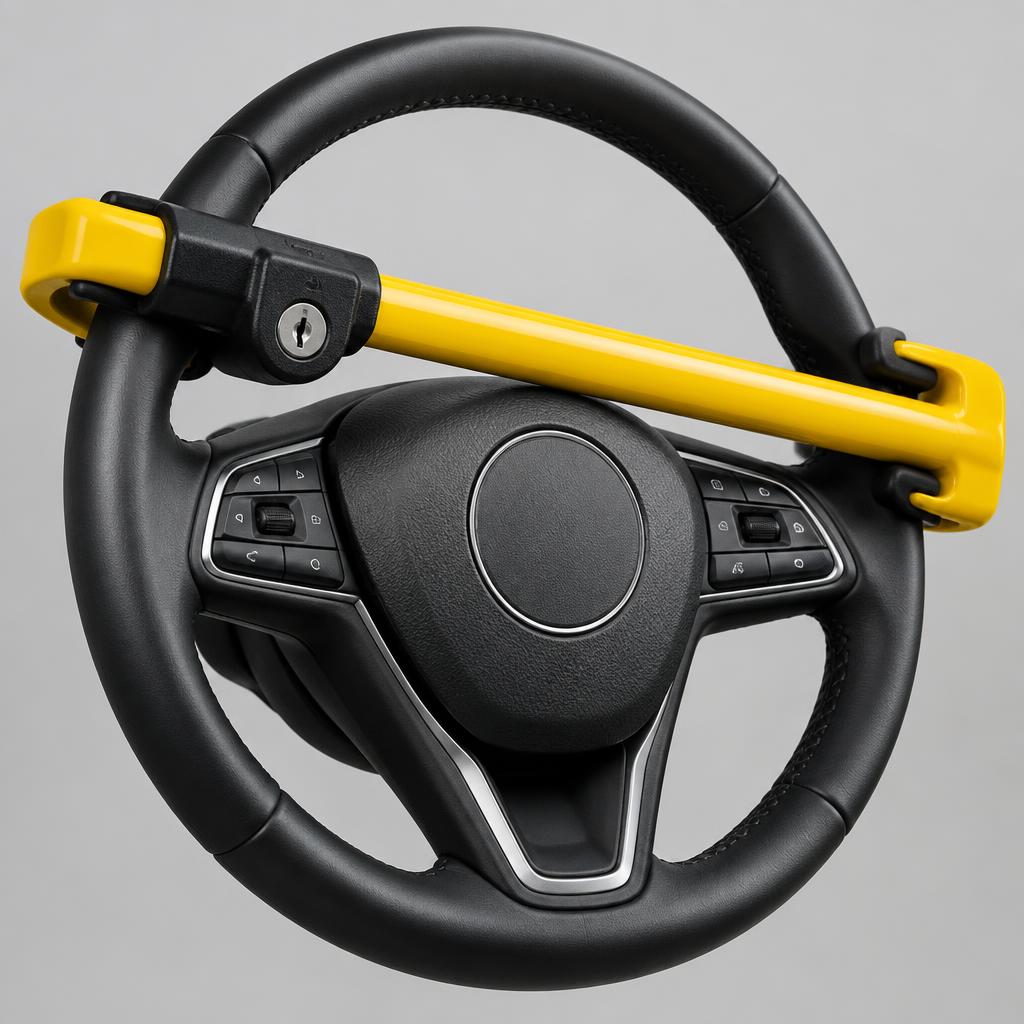 08SAFETY
Steering Wheel Lock
A hardened-steel bar locks across the steering wheel, preventing it from being turned. It is a decades-old design that still works because it is slow to defeat and, more importantly, highly visible through the windshield.
Why you need it
Most vehicle theft is opportunistic. A visible lock encourages a thief to move to an easier target, and it adds a noisy, time-consuming layer even for a determined one. It complements—rather than replaces—an alarm or immobilizer.
Pros
Strong visual deterrent
No installation or wiring
Works on almost any vehicle
Cons
Must be fitted and removed every trip
Bulky to store inside the car
Category
Emergency
 09EMERGENCY
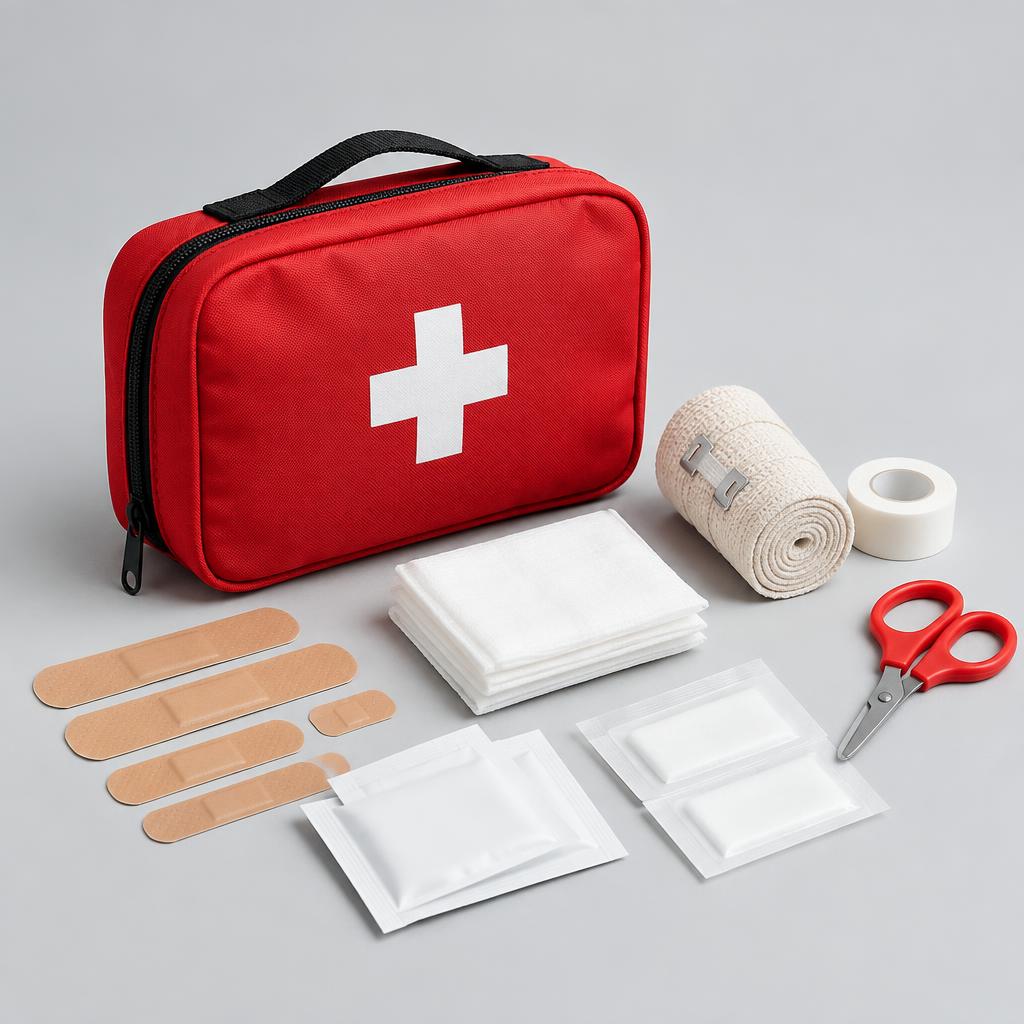
Vehicle First Aid Kit
A dedicated vehicle first aid kit keeps bandages, gauze, antiseptic, and basic tools organized and within reach. Compact zippered cases fit under a seat or in a trunk organizer without taking usable space.
Why you need it
Minor cuts, scrapes, and burns are common on trips, and supplies scattered in a glovebox are rarely usable when needed. A sealed, organized kit buys time until professional help arrives.
Pros
Inexpensive peace of mind
Compact and self-contained
Easy to inspect and restock
Cons
Contents expire and need periodic replacement
Basic kits lack supplies for serious injuries
Category
Technology & Charging
 10TECHNOLOGY
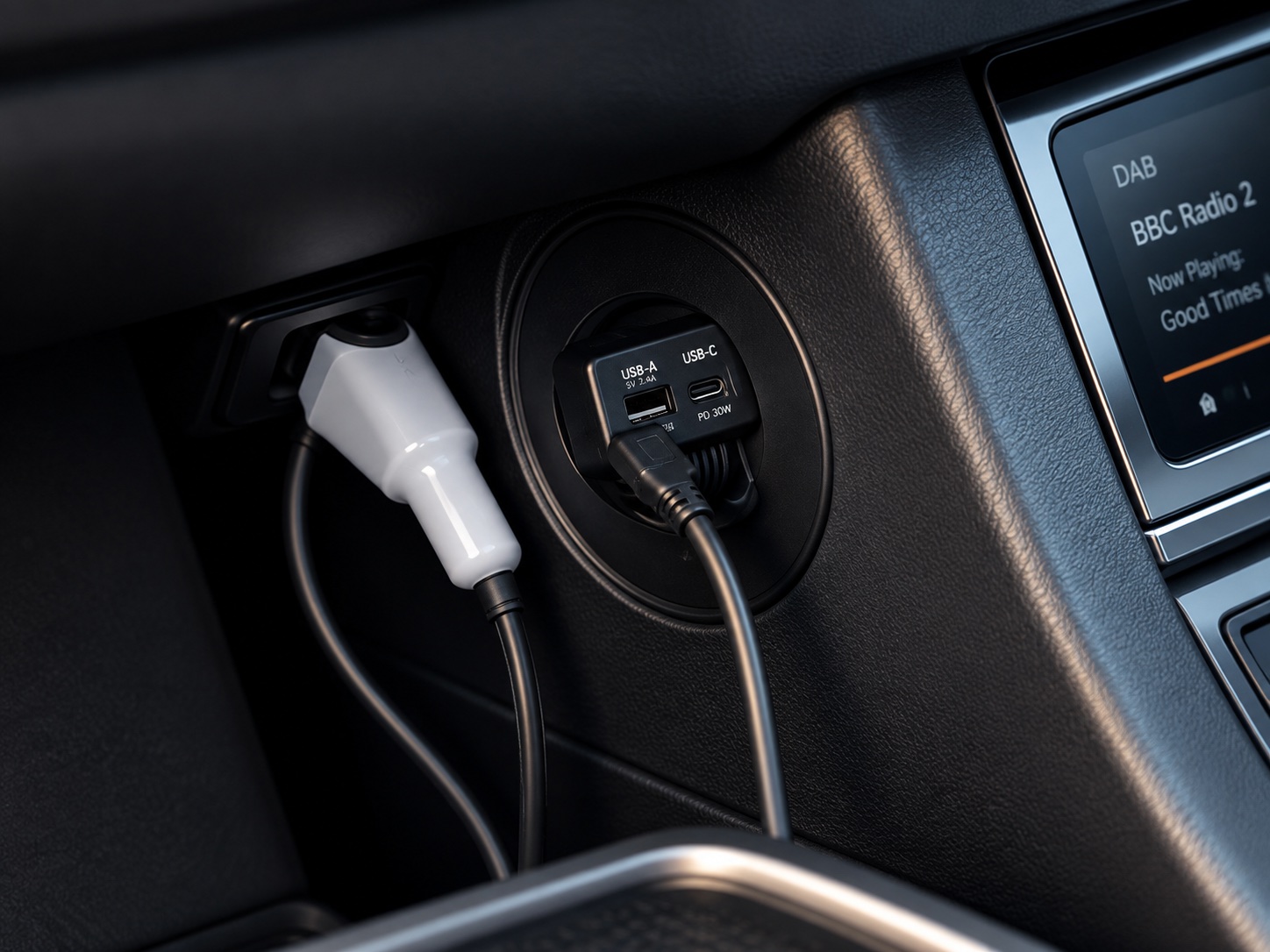
USB-C Fast Car Charger
A properly specified USB-C Power Delivery charger can keep current phones, tablets, and some laptops powered without replacing the vehicle's head unit.
Why you need it
Older USB-A ports often charge slowly while navigation runs. A quality 12-volt adapter is a small, transferable upgrade.
Pros
Low cost
Works across devices
No permanent installation
Cons
Cable quality affects speed
Total output may be shared
 11TECHNOLOGY
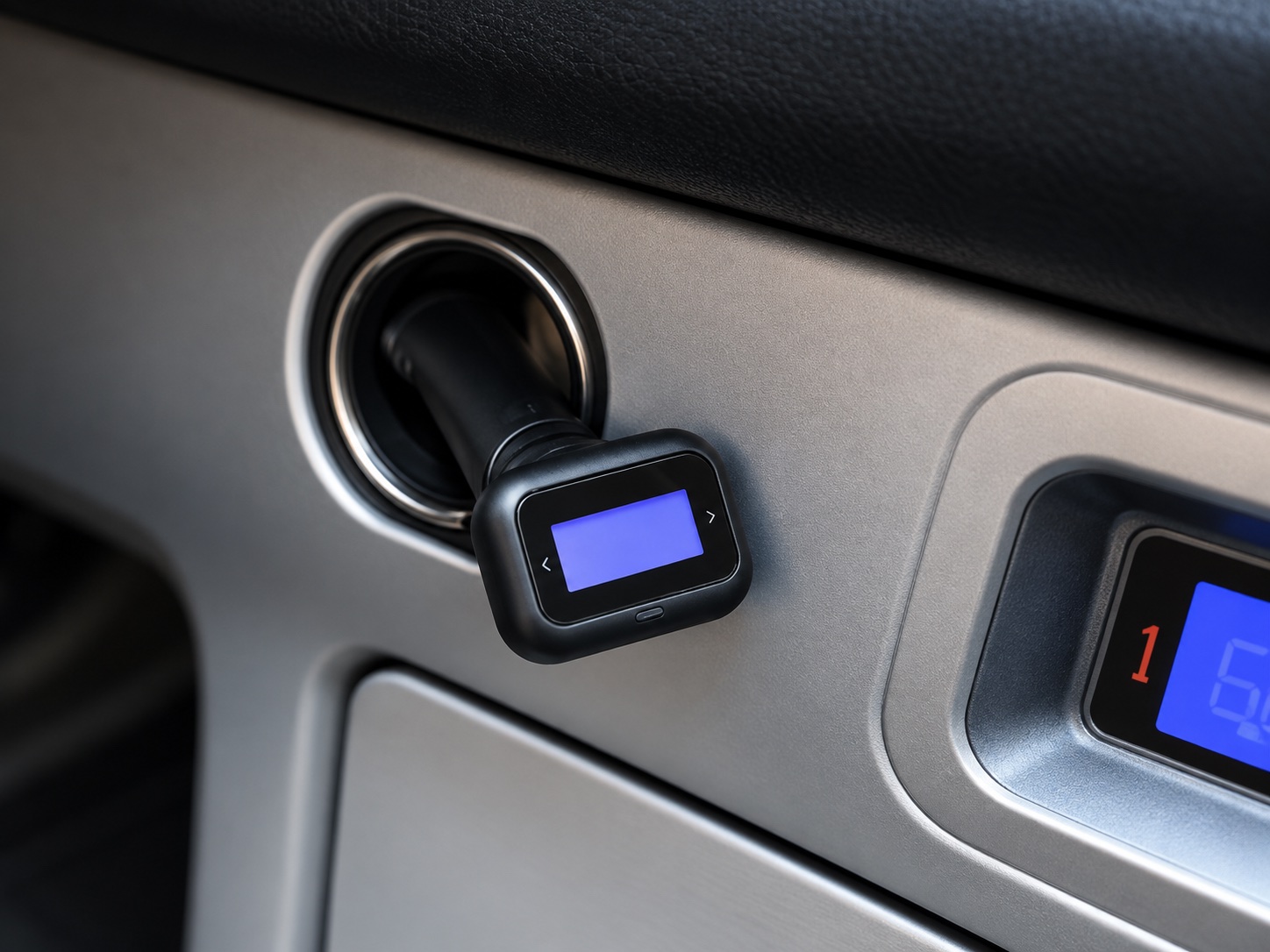
Bluetooth Audio Adapter
A Bluetooth receiver adds wireless calls and audio to a stereo with an auxiliary input. FM transmitters work where no aux input exists, though sound quality varies by local radio congestion.
Why you need it
It brings useful modern connectivity to an otherwise dependable older car without an expensive dashboard replacement.
Pros
Affordable modernization
Easy to remove
Keeps original dashboard
Cons
May add visible cables
FM models can pick up interference
 12TECHNOLOGY
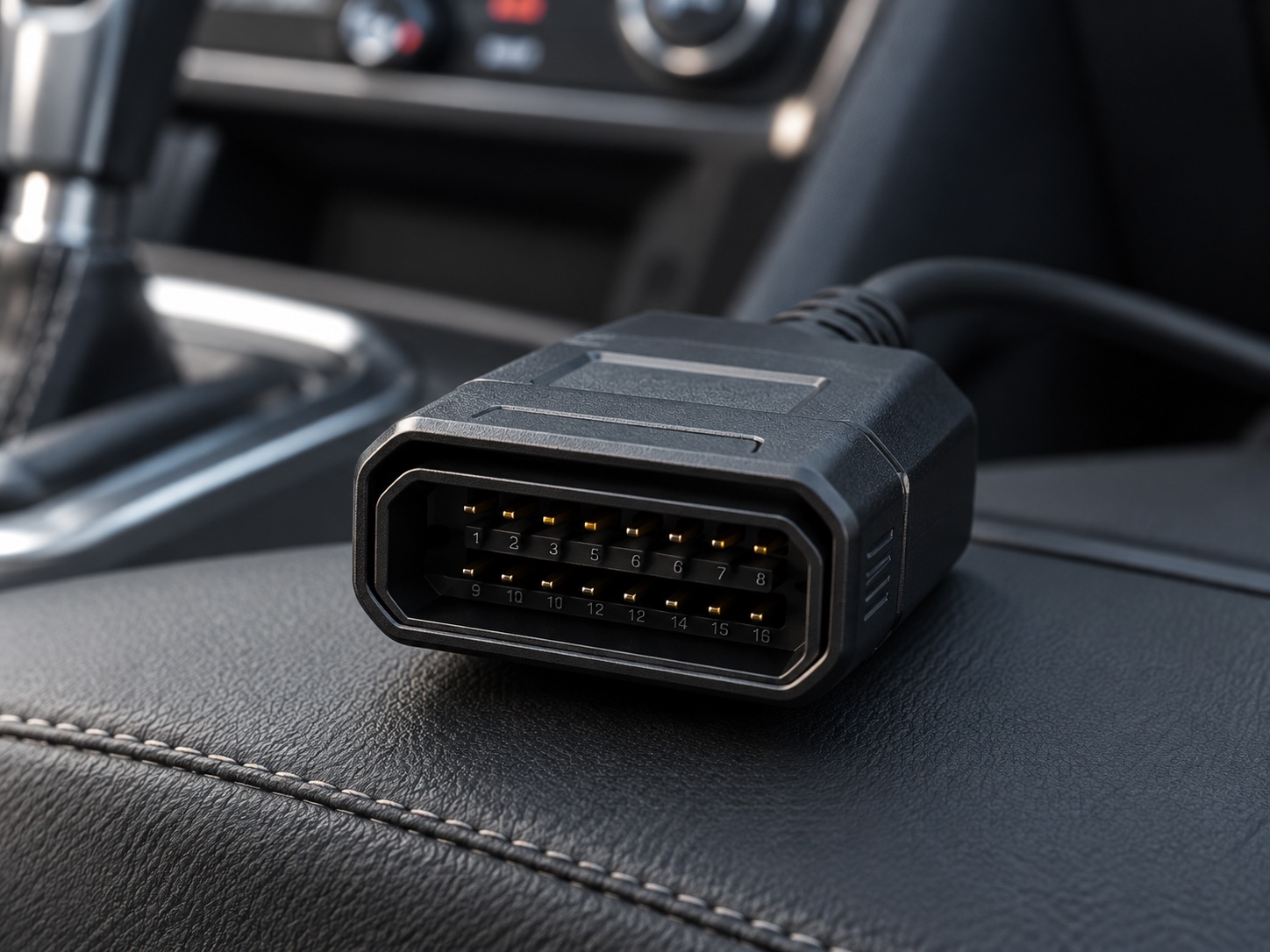
OBD-II Scanner
An OBD-II reader retrieves standardized fault codes and live engine data from most US-market vehicles built since 1996.
Why you need it
It helps you understand a warning light before arranging service, but a code identifies a system—not automatically the failed part.
Pros
Improves repair conversations
Small and transferable
Can monitor useful live data
Cons
Advanced modules may need premium tools
Misreading codes can lead to wasted parts
 13TECHNOLOGY
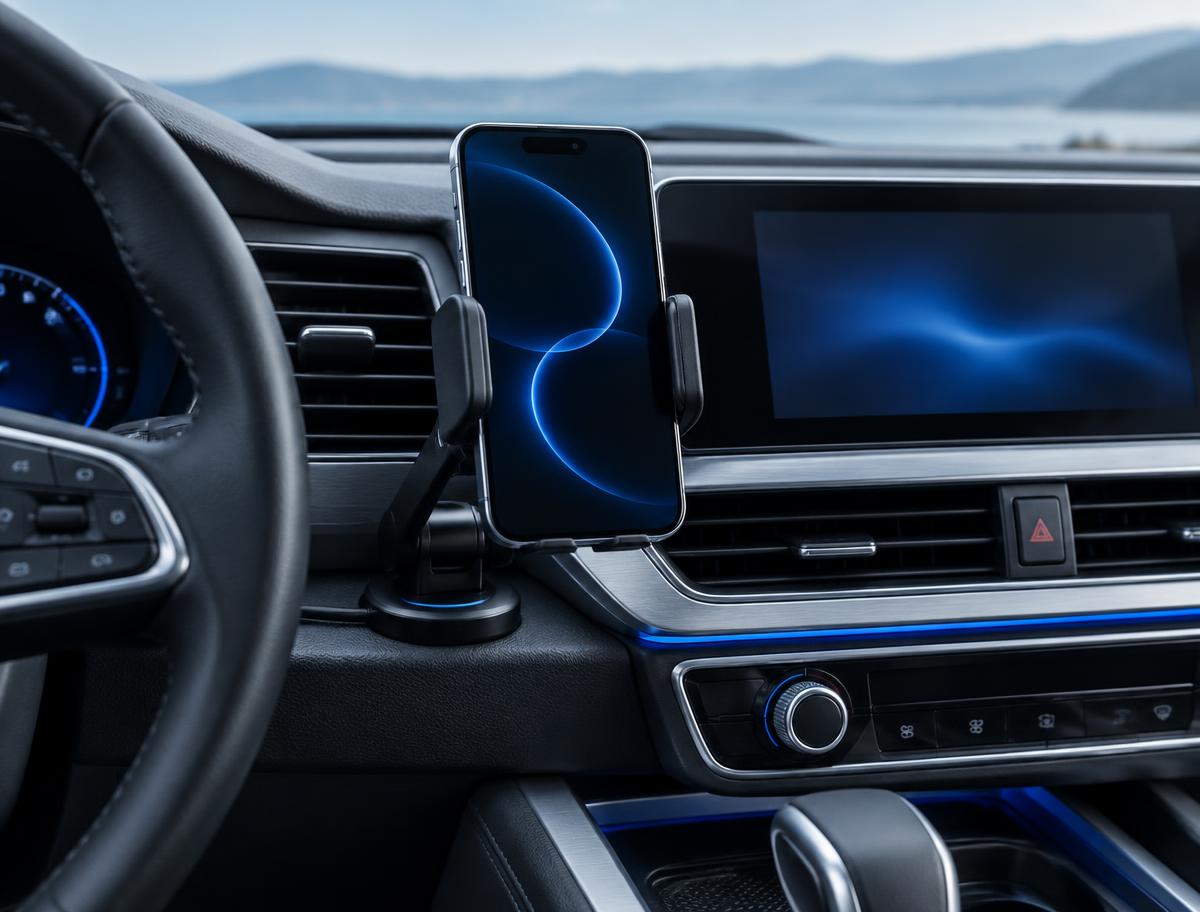
Wireless Charging Mount
A wireless charging mount combines secure phone positioning with cable-free docking. The convenience is real, although charging is typically slower and warmer than a direct USB-C connection.
Why you need it
It reduces repeated cable handling and keeps navigation in a consistent position, provided the mount stays clear of airbags, controls, vents, and the driver's sightline.
Pros
Simple daily docking
Keeps the charging cable off the phone
Combines two accessories in one
Cons
Creates more heat than wired charging
Thick cases can reduce charging reliability
 14TECHNOLOGY
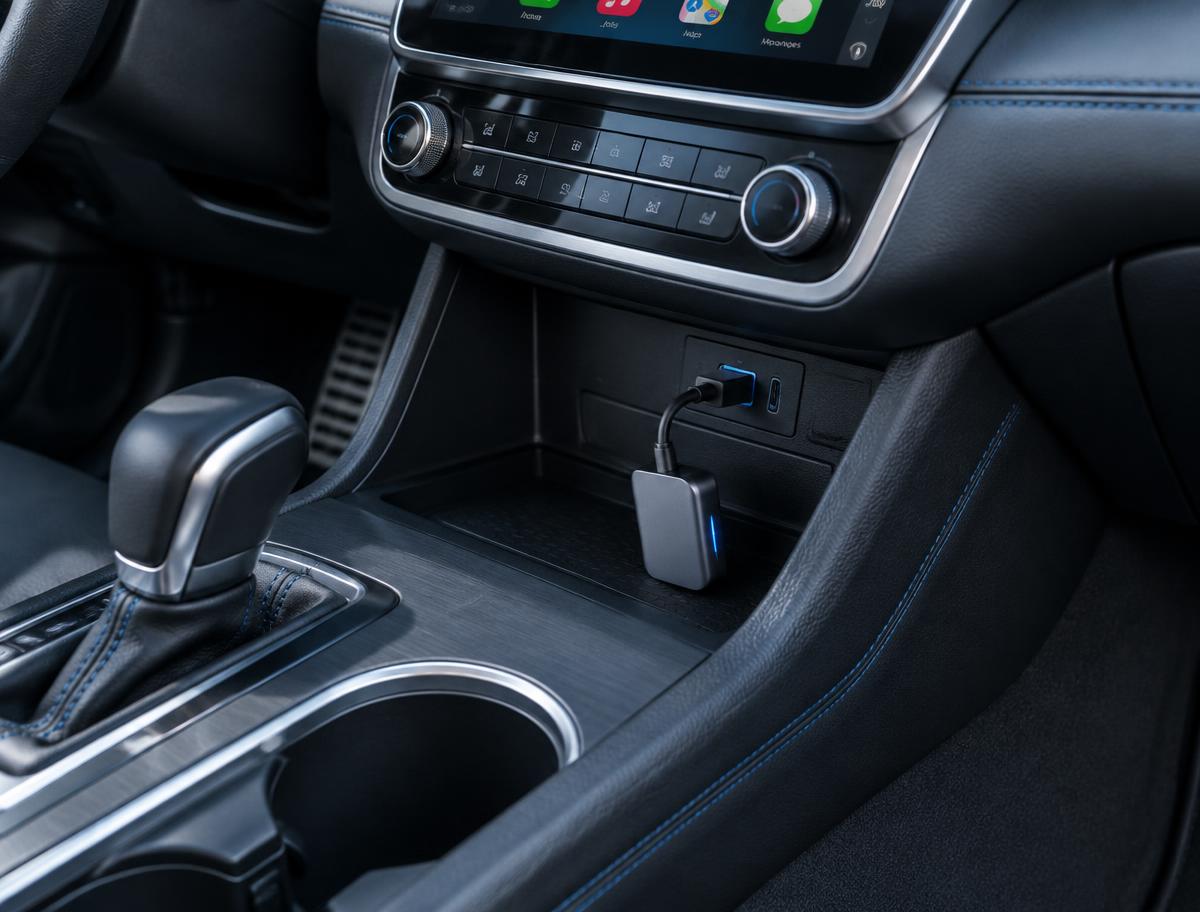
Wireless CarPlay Adapter
A compact adapter can convert a factory wired CarPlay connection into a wireless one. It preserves the existing dashboard interface, though startup time and connection stability vary between vehicles and phones.
Why you need it
It removes the need to plug in a phone for short trips and keeps the console tidier without replacing the factory infotainment system.
Pros
Retains factory controls
Easy to move or remove
Reduces daily cable handling
Cons
Only works with compatible wired CarPlay systems
May introduce delay or occasional dropouts
 15TECHNOLOGY
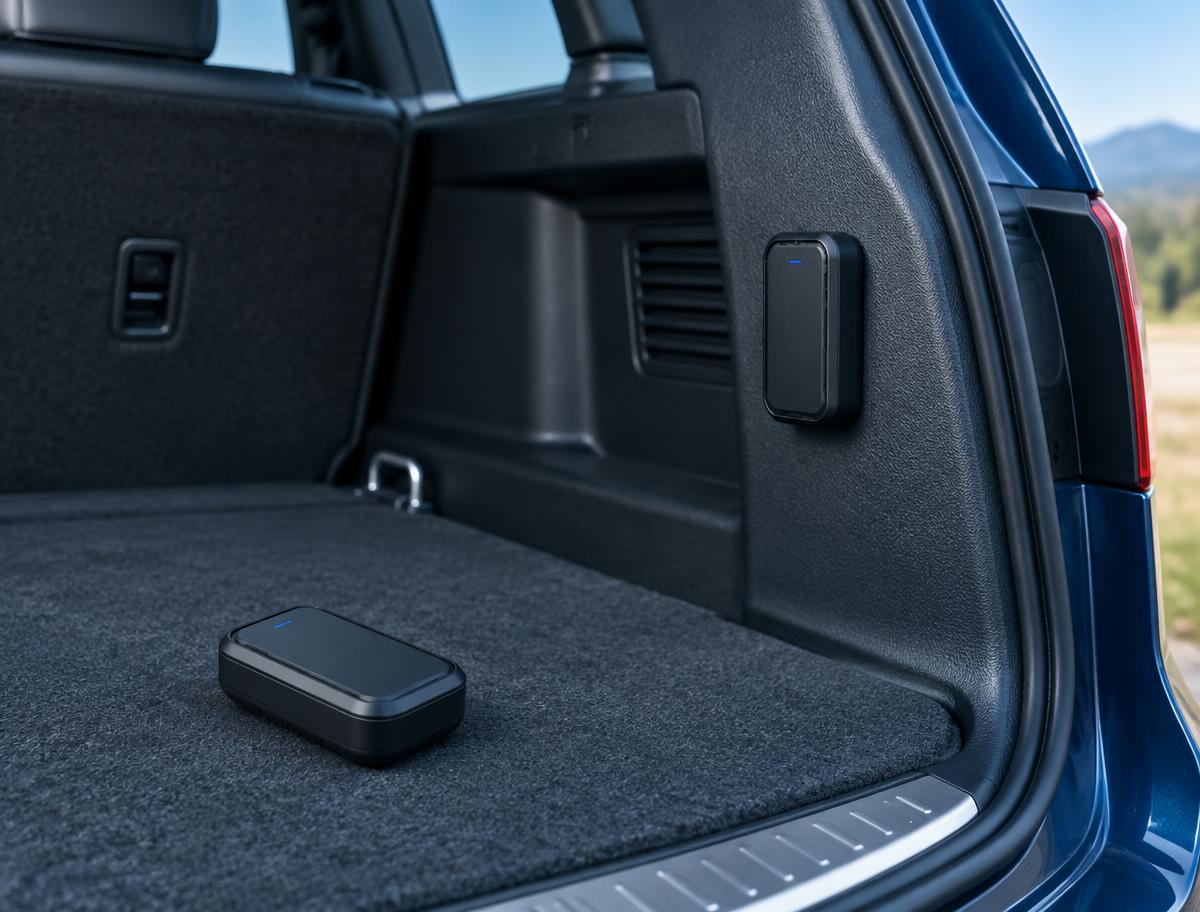
Vehicle GPS Tracker
A vehicle tracker reports location through a phone app using cellular or connected-network coverage. Hardware prices can be modest, but many models require an ongoing subscription for dependable live updates.
Why you need it
For a vehicle you own, a company fleet whose drivers are informed, or a vehicle you own that is driven by a minor in your care, it can help locate a parked car and provide useful trip records. Tracking a vehicle you do not own, or one that another adult drives without their knowledge, is unlawful in many jurisdictions.
Pros
Helps locate a vehicle
Can provide arrival alerts
Portable models move between cars
Cons
Often requires a monthly fee
Raises legal and privacy questions, since tracking rules and consent requirements limit when and where one can be used
 16TECHNOLOGY
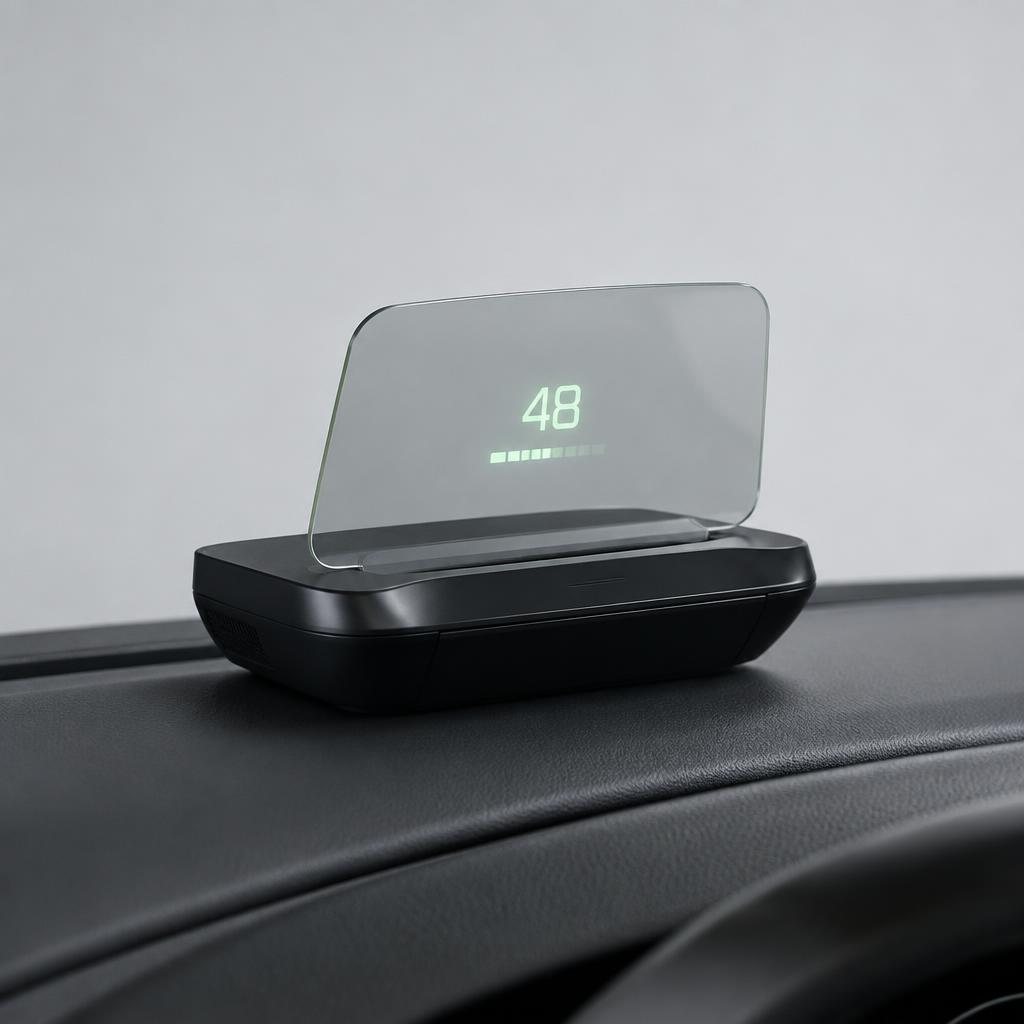
Head-Up Display
An aftermarket head-up display sits on the dashboard and projects speed—and on higher models, navigation prompts and warnings—onto a small reflective screen at eye level. Most connect via OBD-II or GPS.
Why you need it
Looking down at the instrument cluster takes your eyes off the road for a second or more at a time. A clear, dimmable readout at eye level reduces that glance time, which is the entire point of the gadget.
Pros
Keeps eyes closer to the road
Easy plug-in setup
Works in older vehicles
Cons
Cheap units wash out in direct sunlight
OBD-II data can lag real speed slightly
Category
Organization
 17ORGANIZATION
Structured Trunk Organizer
A rigid-sided organizer keeps groceries, emergency gear, charging cables, and cleaning supplies from sliding around the cargo area.
Why you need it
Loose objects become noisy distractions and can move dangerously during hard braking. Organization also makes emergency equipment easier to find.
Pros
Immediate improvement
Flexible storage
Protects smaller items
Cons
Uses cargo space
Soft models may collapse
 18ORGANIZATION
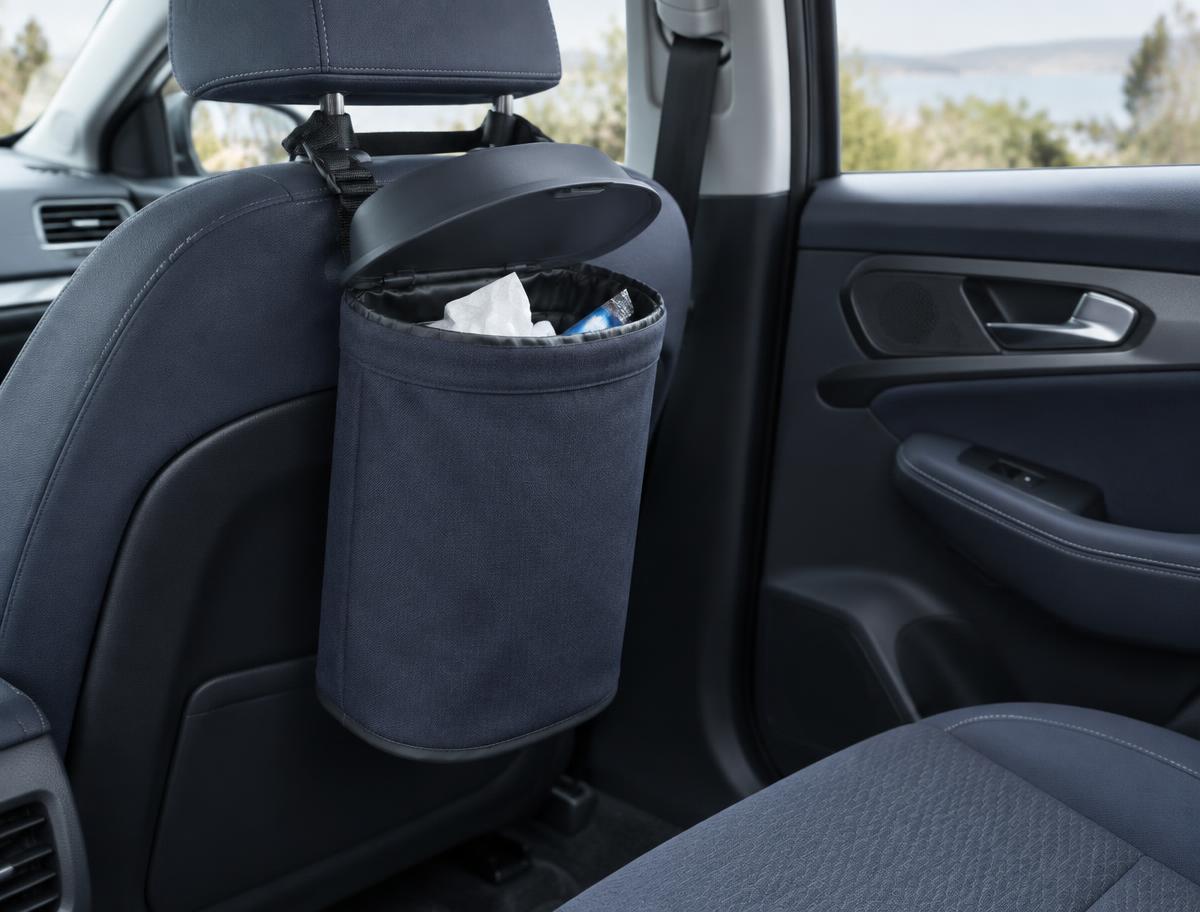
Leakproof Car Trash Can
A dedicated car trash can gives wrappers, receipts, and wipes a single place to go instead of the door pocket or floor. Leakproof linings and a lid keep spills and smells contained between emptying.
Why you need it
Loose rubbish accumulates quickly on commutes and family trips, and cleaning it out of seat creases and cup holders takes far longer than preventing it. A lidded, lined bin keeps the cabin presentable with almost no effort.
Pros
Keeps rubbish contained and out of sight
Cheap and universally compatible
Empties and wipes down in minutes
Cons
Needs regular emptying to stay hygienic
Floor-standing models can tip without a strap
 19ORGANIZATION
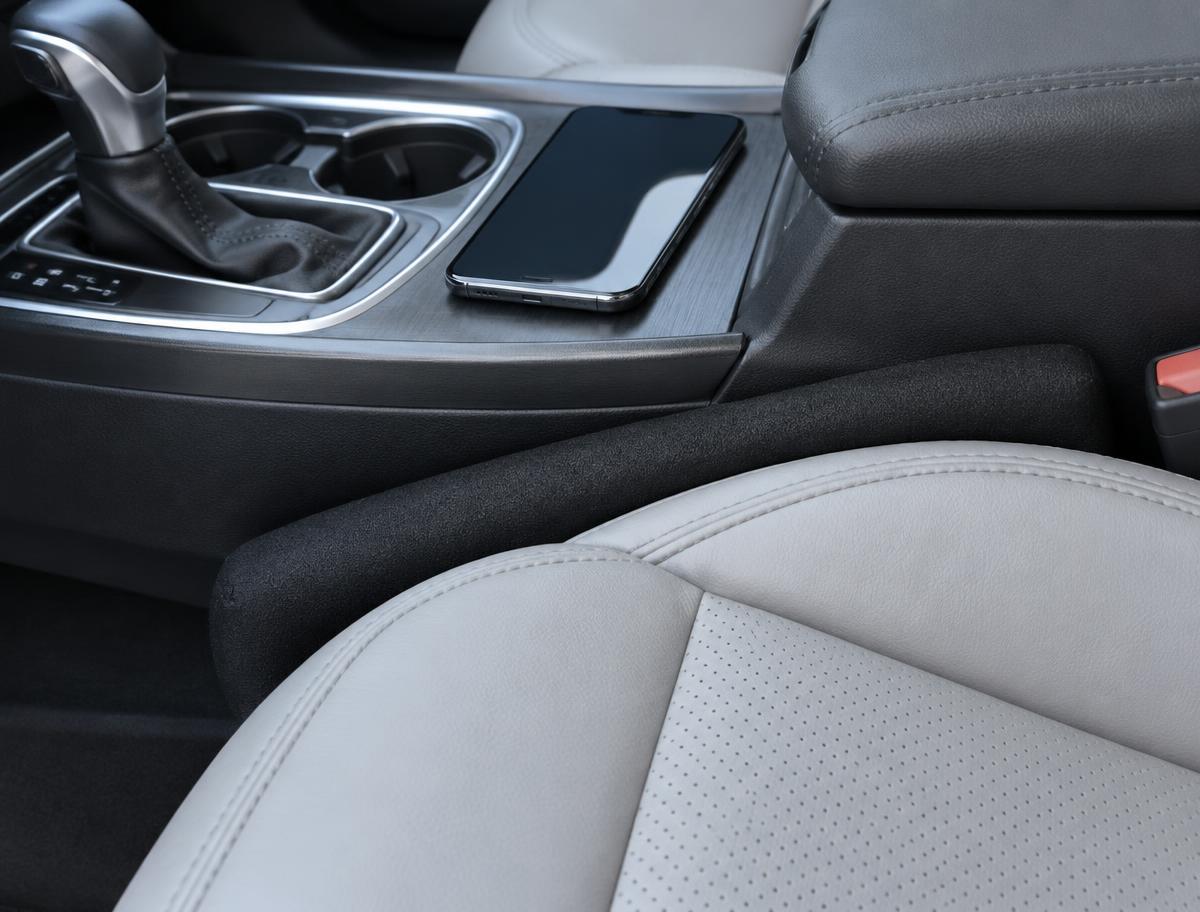
Seat Gap Filler
A seat gap filler is a foam or fabric strip that wedges between the seat and the center console, closing the slot where phones, coins, and parking cards disappear. It moves with the seat and needs no tools or adhesive.
Why you need it
Retrieving a dropped phone from under the seat is awkward at best and a distraction while driving at worst. Blocking the gap removes the problem entirely for a few dollars.
Pros
Installs in seconds
Fits most vehicles
Stops small items from vanishing
Cons
Can look untidy on some interiors
Cheap versions may compress or slide over time
 20ORGANIZATION
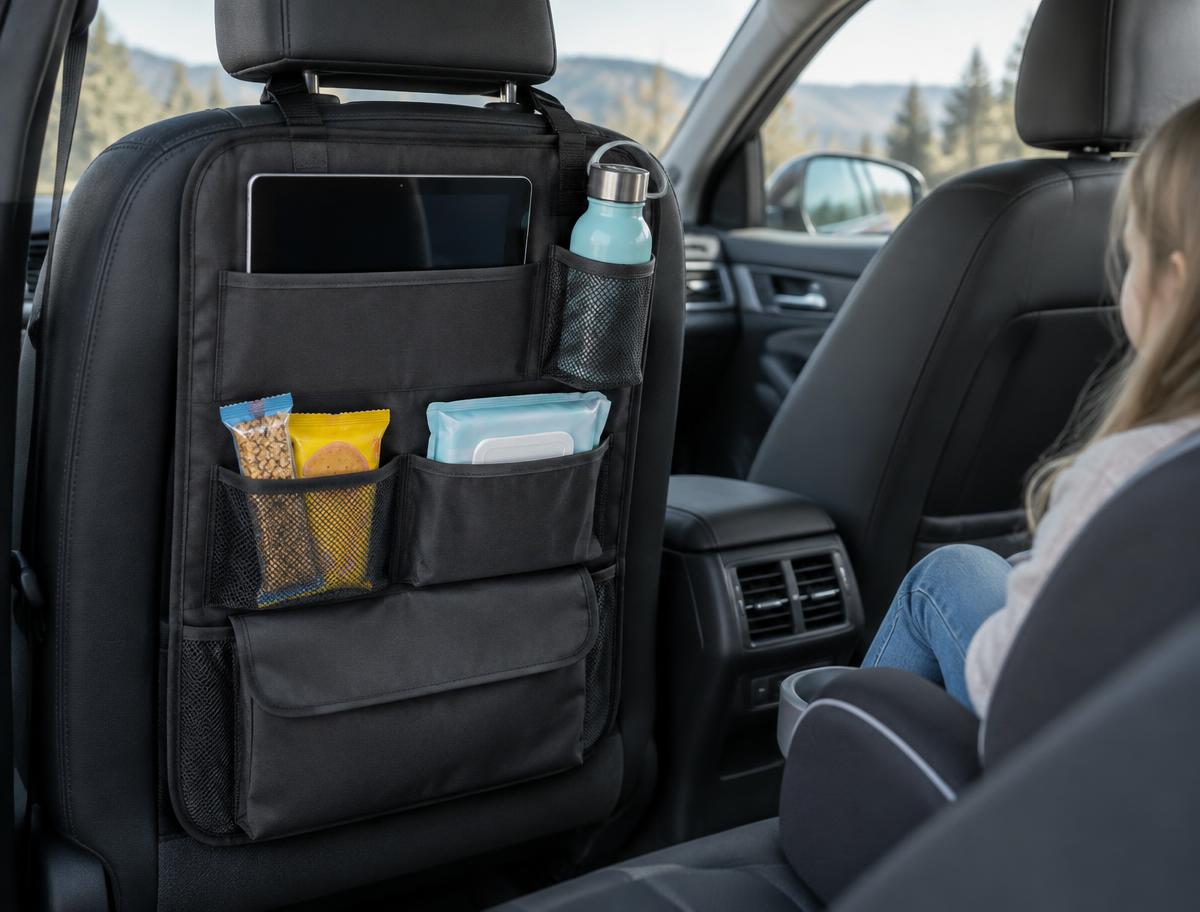
Backseat Organizer
A backseat organizer hangs from the front-seat headrest and puts pockets, a bottle holder, and often a tablet sleeve within a passenger's reach. It keeps trip supplies off the seat and the floor.
Why you need it
Rear passengers—especially children—generate a steady supply of snacks, bottles, tablets, and wipes. Giving each item a visible pocket reduces mess, arguments over lost items, and the need to hand things back mid-drive.
Pros
Keeps children’s supplies within reach
Protects seat backs from kicks and scuffs
Installs and removes in under a minute
Cons
Overloaded pockets can sag against the seat
Some models block rear air vents or seat-back screens
Category
Cleaning
 21CLEANING
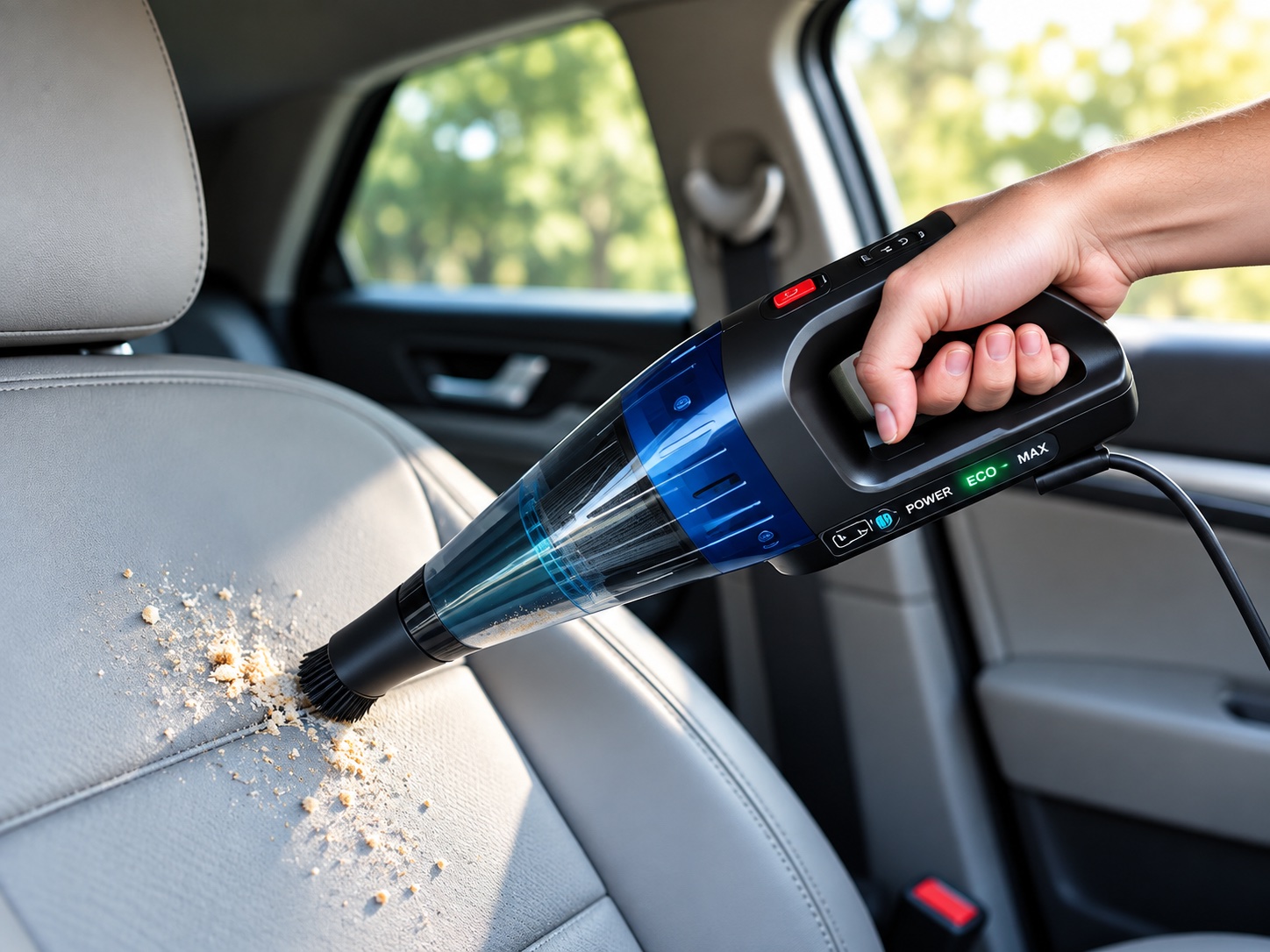
Compact Cordless Vacuum
A compact vacuum handles crumbs, grit, pet hair, and dust between full details. Useful models balance suction, runtime, filtration, and an actually narrow crevice tool.
Why you need it
Frequent light cleaning prevents debris from being ground into carpet and makes the cabin more pleasant without a trip to a wash bay.
Pros
Convenient spot cleaning
Useful beyond the car
Cordless access to tight spaces
Cons
Small bins fill quickly
Budget models may lack suction
 22CLEANING
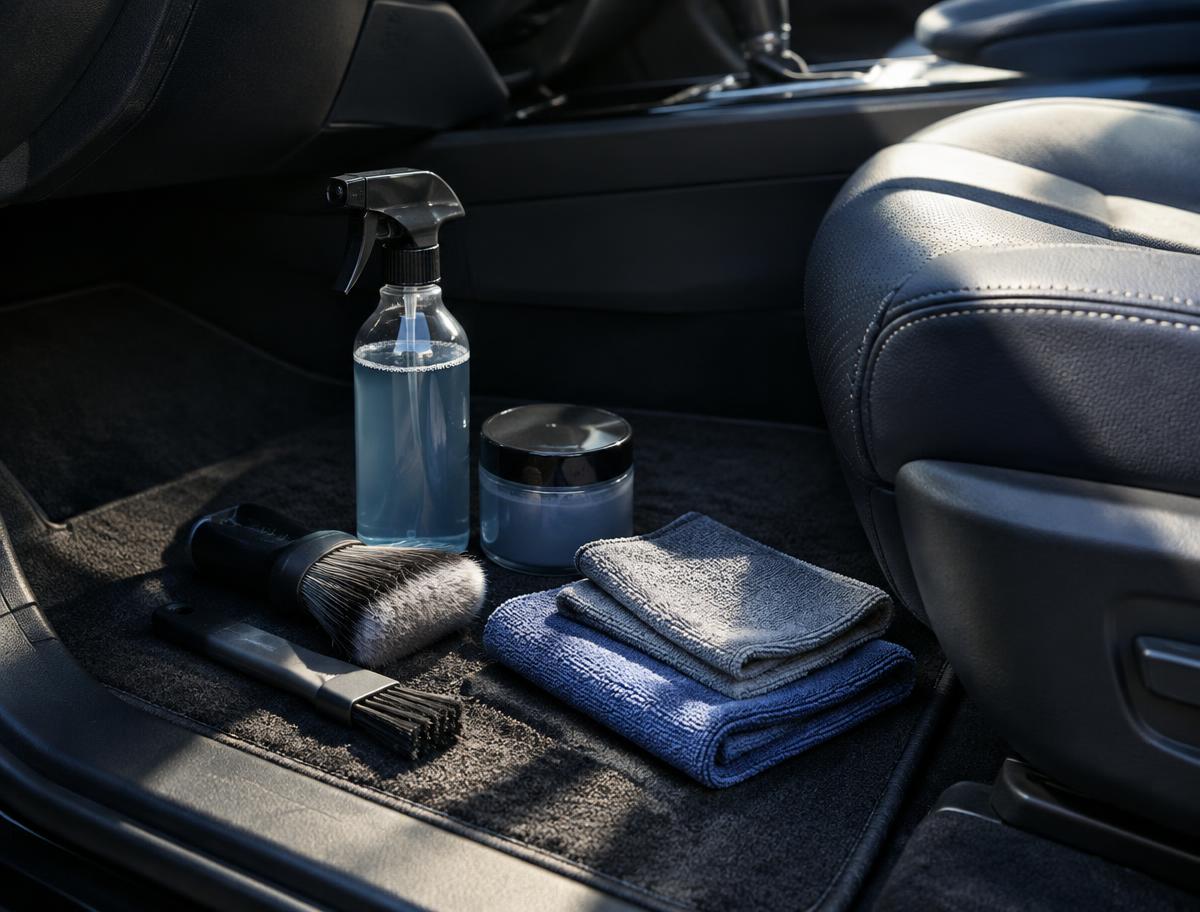
Interior Detailing Kit
An interior detailing kit bundles the brushes, microfiber cloths, and cleaners needed to reach vents, seams, and crevices that a quick vacuum misses. Kits vary widely, so the useful contents matter more than the piece count.
Why you need it
Dust and grime build up in air vents, stitching, and switchgear where ordinary cloths cannot reach. Soft brushes and the right cleaner remove it without scratching trim or soaking electronics.
Pros
Reaches places a vacuum and cloth cannot
Costs less than one professional detail
Consumables are easy to replace individually
Cons
Large kits often pad the count with low-value pieces
Results depend on time and patience, not just the tools
Category
Comfort
 23COMFORT
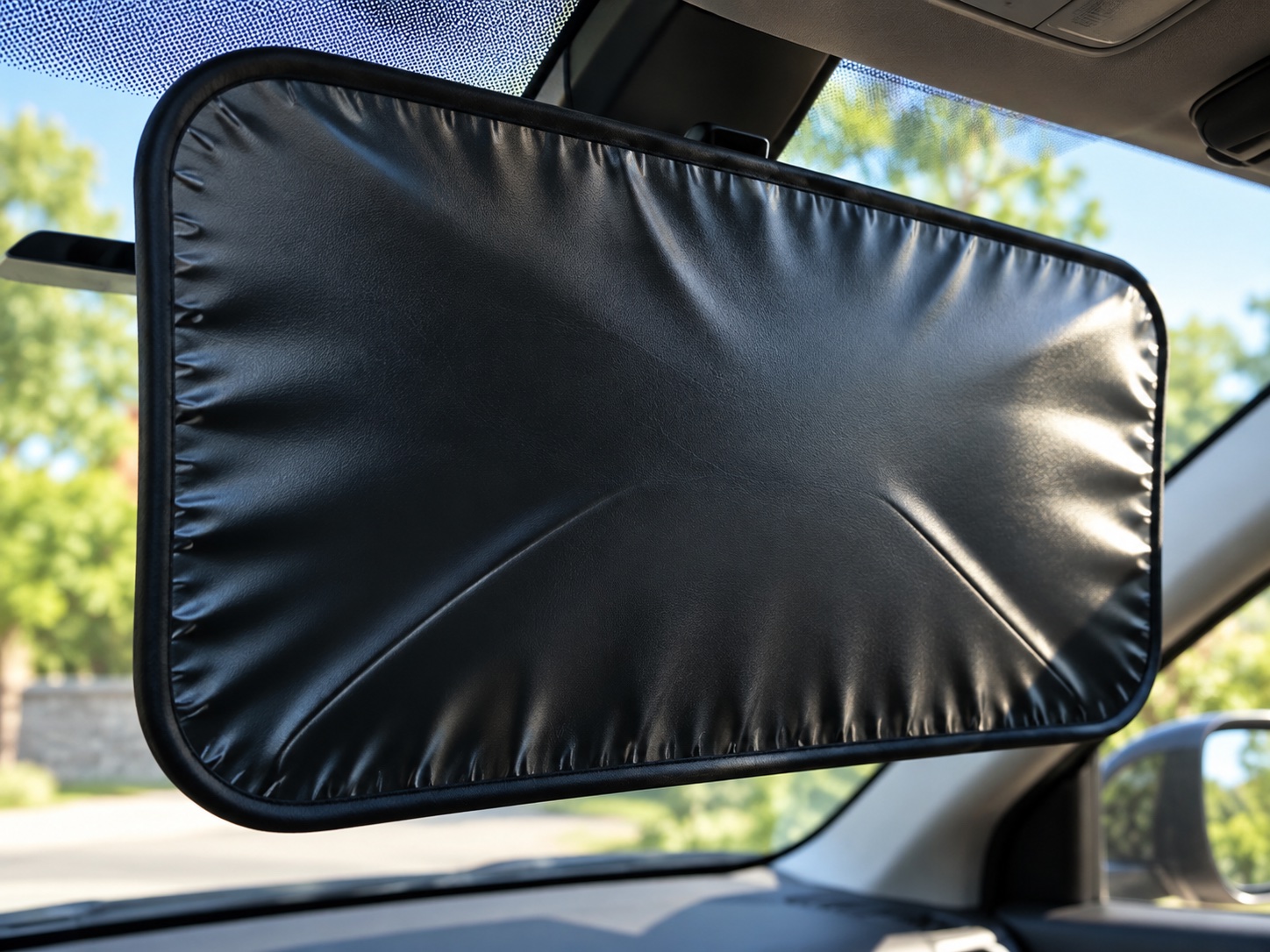
Vehicle-Fit Sunshade
A properly fitted reflective shade reduces direct solar load on the dashboard and front seats while the vehicle is parked.
Why you need it
It can make the first minutes after parking more comfortable and limits prolonged direct UV exposure on interior surfaces.
Pros
No power needed
Simple interior protection
Useful every sunny day
Cons
Bulky when folded
Generic sizes can sag
 24COMFORT
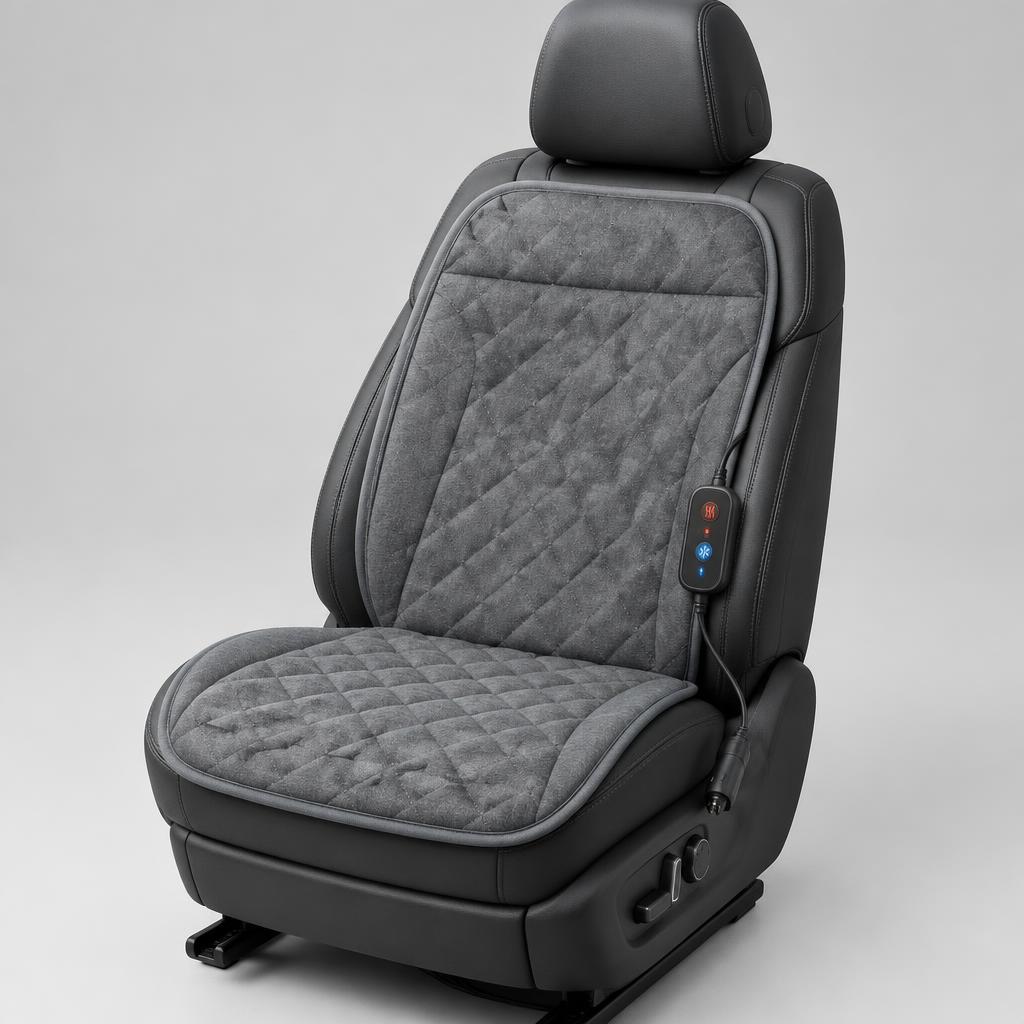
Heated & Cooled Seat Pad
A 12-volt seat pad straps over the existing seat and adds heating elements for winter, a fan for summer, or both in one unit. It plugs into the accessory socket and is controlled by a small inline remote.
Why you need it
Factory heated and ventilated seats are often locked to high trim levels. A pad delivers most of the benefit for a fraction of the price and moves with you between vehicles.
Pros
Works in almost any vehicle
Genuine relief in heat and cold
No permanent modification
Cons
Adds a visible wire to the cabin
Cooling fans are audible on higher settings
 25COMFORT
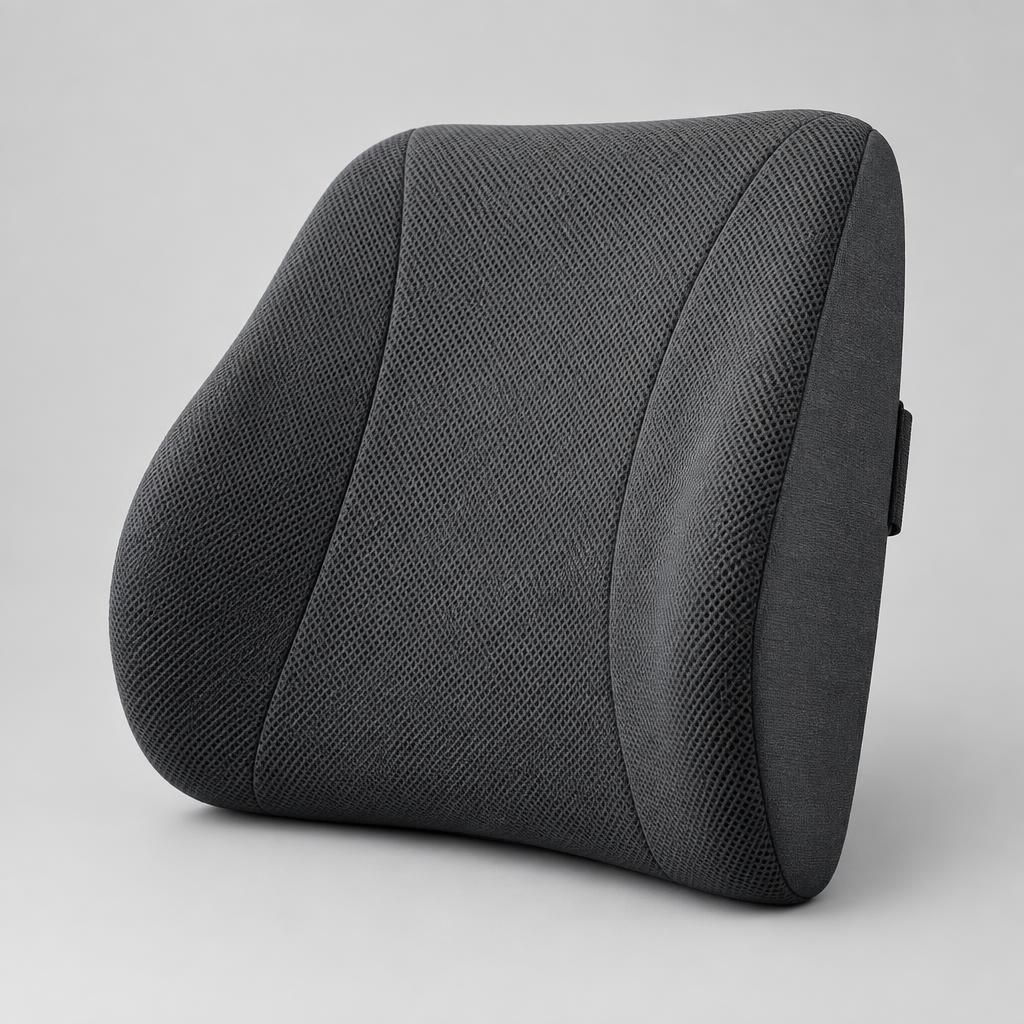
Support Seat Cushion
A shaped memory-foam cushion or lumbar support corrects the flattened, unsupportive posture many factory seats encourage. Wedge cushions raise hip position; lumbar rolls fill the lower-back gap.
Why you need it
Poor seat support concentrates pressure on the lower back and tailbone, which shows up as stiffness and fatigue after an hour or two. A well-shaped cushion is a cheap fix compared with replacing a seat.
Pros
Immediate comfort improvement
Transfers between vehicles and office chairs
No tools or fitting
Cons
Adds height, which matters in low-headroom cars
Foam softens in hot weather
 26COMFORT
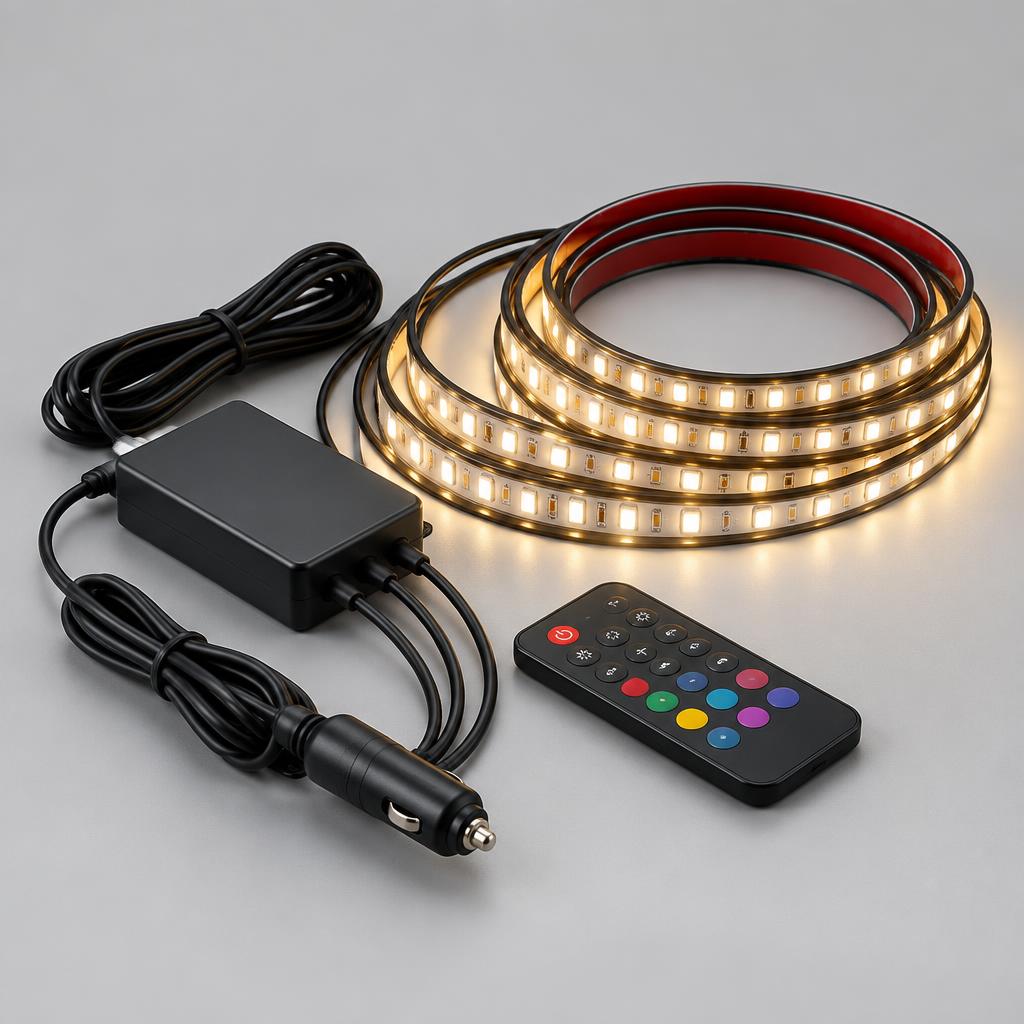
Interior LED Lighting Kit
Flexible LED strips mount under the dashboard and seats, powered from the 12-volt socket or USB. Most kits include a remote or app control for color and brightness, and install with adhesive backing in under an hour.
Why you need it
Subtle footwell lighting makes it easier to find dropped items at night and gives older cabins a more modern feel. Fitted carefully, it is one of the cheapest ways to change how a car's interior feels after dark.
Pros
Inexpensive and reversible
Genuinely useful footwell light
Simple DIY installation
Cons
Adhesive can fail on hot dashboards
Bright or animated colors are distracting if overused
Category
Road Trips
 27ROAD TRIPS
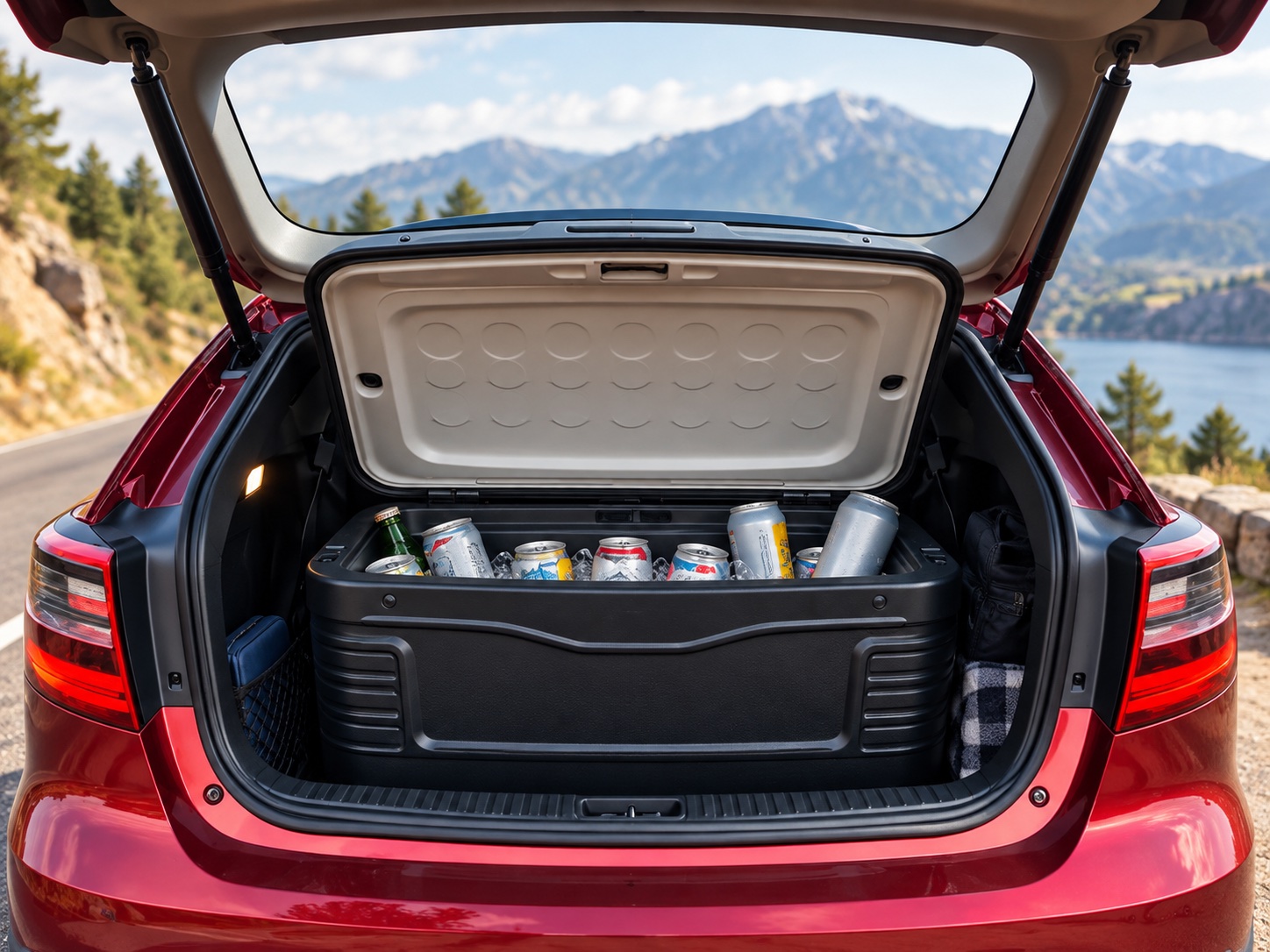
12-Volt Portable Cooler
A powered cooler keeps food and drinks chilled without melting ice. Compressor models cool more effectively than low-cost thermoelectric units but cost and weigh more.
Why you need it
It reduces roadside stops and keeps temperature-sensitive items more consistent on long journeys.
Pros
No wet ice
Useful at campsites
Repeatable temperature control
Cons
Occupies cargo space
Can drain a battery if unmanaged
 28ROAD TRIPS
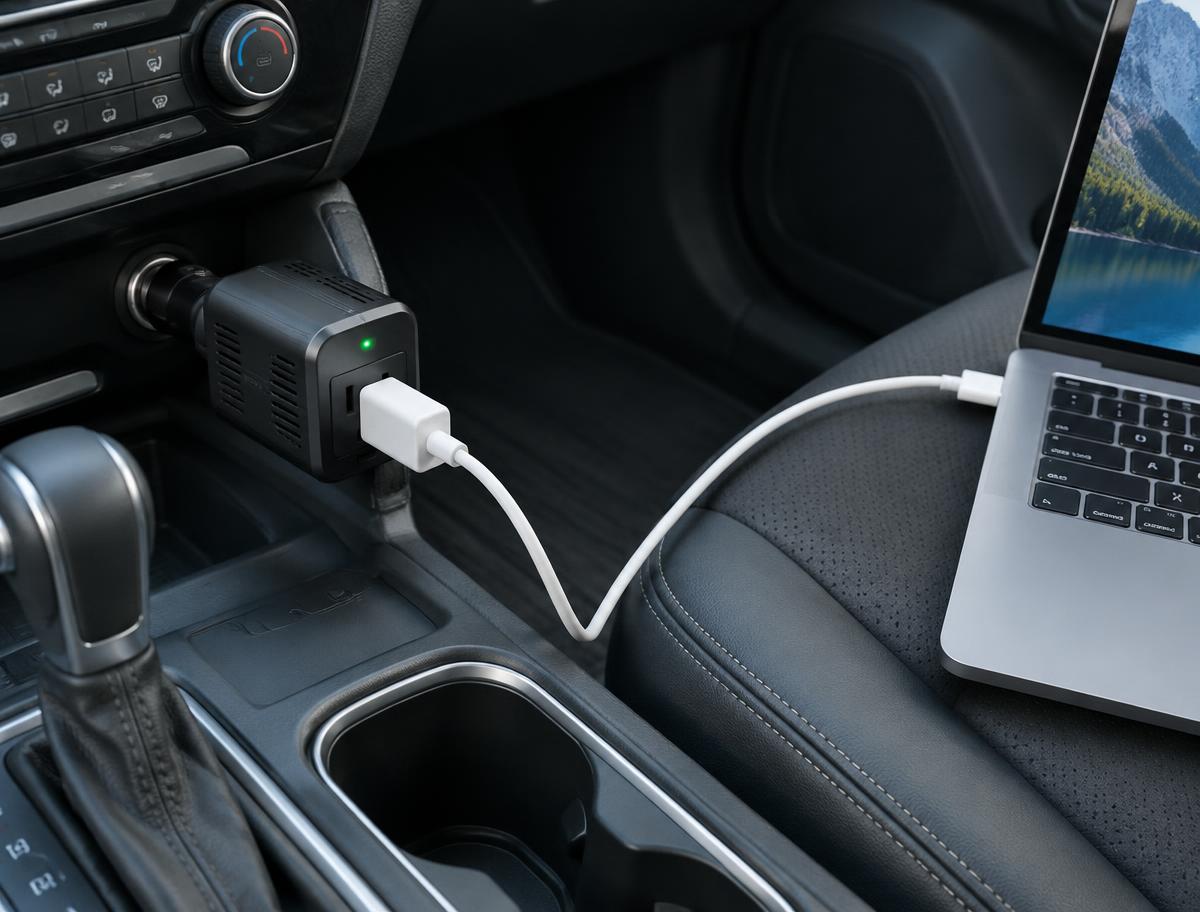
Power Inverter
A power inverter converts the vehicle’s 12-volt supply into household-style AC outlets, letting you run or charge a laptop, camera batteries, or a small appliance. Output ratings vary widely, and the vehicle’s wiring sets the real ceiling.
Why you need it
Some devices have no USB or 12-volt option, and a laptop charger is the common example. A 12V socket typically supplies only around 120–150 watts, so higher-output inverters need a direct battery connection with appropriate fusing rather than a plug-in adapter.
Pros
Powers devices that USB cannot
Small models fit in a glovebox
Direct-wire kits support heavier loads safely
Cons
Fan noise on larger units
Heavy loads drain the battery quickly with the engine off, and a 12V socket cannot supply high-output models
 29ROAD TRIPS
Roof Cargo Bag
A soft-shell roof bag adds roughly 10 to 20 cubic feet of weather-resistant storage without a permanent roof box. It straps to factory rails, crossbars, or a bare roof with door-frame clips, and folds flat when the trip is over.
Why you need it
Overloading the cabin blocks rear visibility and turns luggage into a hazard in a sudden stop. Moving soft, light items like bedding and jackets to the roof frees the cabin—but the vehicle's roof load limit still applies, and the dynamic rating while driving is lower than the static rating when parked. A loaded bag raises the center of gravity, which dulls handling, and the added drag typically costs noticeable fuel economy at highway speeds.
Pros
Far cheaper than a hard roof box
Folds away between trips
Fits most vehicles without rails
Cons
Straps can hum or vibrate if not tightened evenly
Fabric is less theft-resistant and weatherproof than a hard shell